Calibrate Coffee Grinder: Perfect Grind Every Time
Calibrating your coffee grinder ensures a consistent particle size, which is fundamental for optimal flavor extraction and a delicious cup every time.
Ever wondered why your home-brewed coffee sometimes tastes amazing, and other times, well, just "okay"? The secret often lies in the grind. A consistent grind is the unsung hero behind every perfectly extracted cup, from a bright espresso shot to a robust French press. As someone who has spent countless hours dialing in grinders, both professional and personal, I can tell you that understanding how to calibrate your coffee grinder for consistent grind is a game-changer. This isn't just about turning a dial; it's about mastering a crucial step in your coffee journey, unlocking the full potential of your beans, and consistently achieving that ideal brew. Get ready to transform your coffee experience from hit-or-miss to reliably extraordinary.

Why Consistent Grind Matters for Your Coffee
Imagine trying to cook a meal where some ingredients are diced finely and others are left in large chunks – the cooking times and flavors would be all over the place, right? The same principle applies to coffee. When you brew coffee, you're essentially extracting flavor compounds from the ground beans. If your grind isn't consistent, meaning some particles are very fine (fines) and others are much coarser (boulders), you'll end up with uneven extraction.
The fines will over-extract quickly, releasing bitter, acrid flavors, while the boulders will under-extract, leaving your coffee tasting sour, thin, or bland. A consistent grind allows all the coffee particles to extract at roughly the same rate, leading to a balanced, flavorful cup that truly showcases the bean's potential. This consistency directly impacts the mouthfeel, sweetness, acidity, and overall enjoyment of your coffee, whether you're making a pour-over or a cold brew.
Understanding Your Coffee Grinder's Calibration
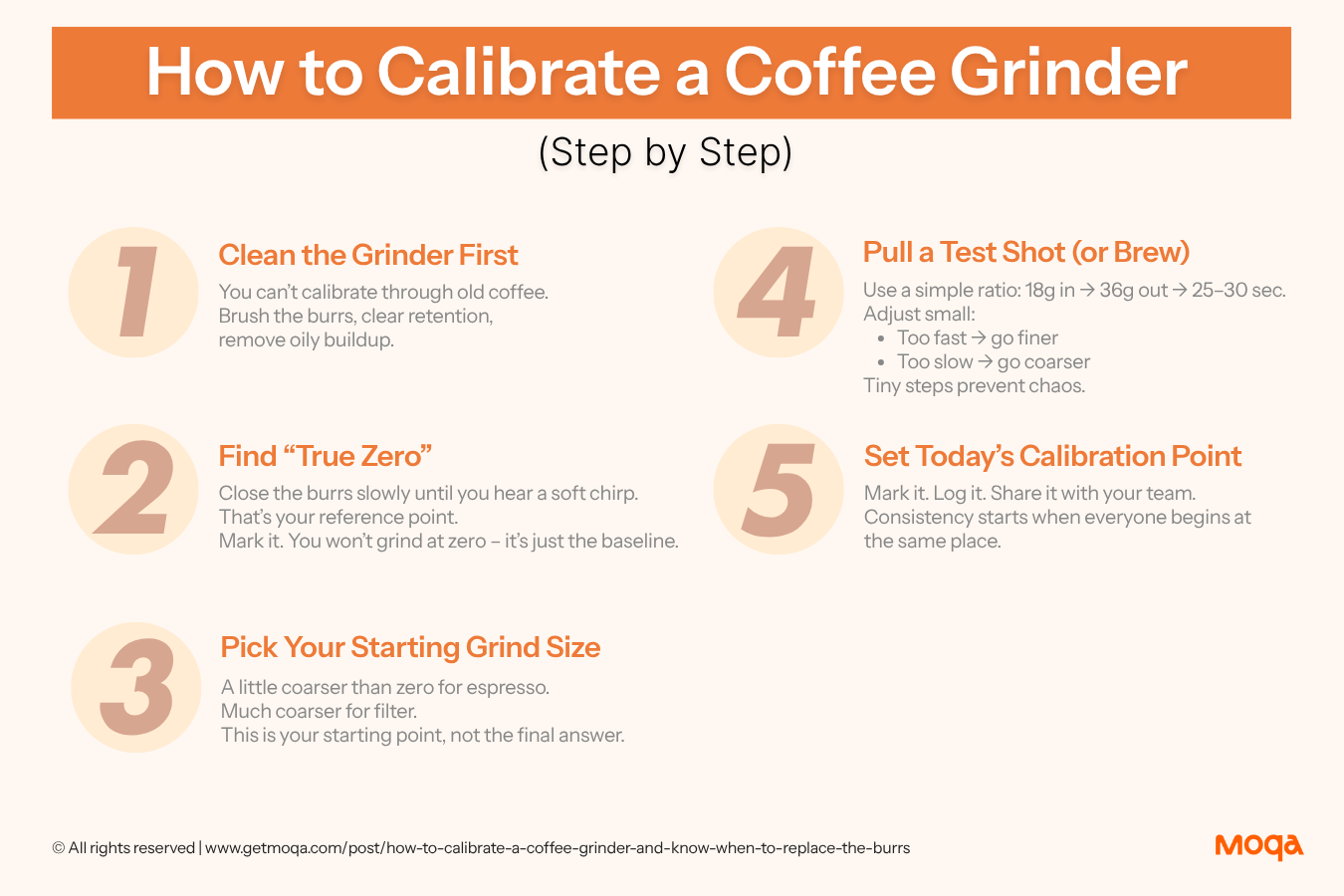
Before we dive into the "how-to," let's demystify what calibration means for a coffee grinder. Essentially, calibrating your coffee grinder involves setting its internal burrs or grinding mechanism to a true "zero" point, which is where the burrs are just touching without grinding. From this zero point, you can then accurately adjust your grind settings, knowing exactly how much coarser or finer you're going. Many grinders, especially home models, might not be perfectly calibrated from the factory, or their settings can drift over time with regular use and cleaning.
A good burr grinder works by passing beans between two abrasive surfaces (burrs) that crush them into uniformly sized particles. When we talk about how to calibrate your coffee grinder, we're making sure these burrs are precisely aligned and that the grinder's external settings accurately reflect the internal burr gap. Without proper calibration, a "medium" setting on your grinder might not actually be a true medium, or it might change without you realizing it. This often leads to frustration when trying to achieve a consistent grind.

Pre-Calibration Checks: Setting the Stage
Before you even think about adjusting burrs, a little prep work goes a long way. This ensures you're starting from a clean slate and can accurately assess your grinder's current state. From my own experience, skipping these initial steps often leads to more confusion down the line.
Here’s what you need to do:
- Clean Your Grinder Thoroughly: This is non-negotiable. Old coffee grounds and oils can build up on the burrs and in the grinding chamber, affecting performance and skewing your calibration efforts. Disassemble the grinding chamber, remove the burrs (if possible and safe to do so according to your manufacturer's instructions), and use a brush, vacuum cleaner, or specialized grinder cleaning tablets to remove all residue. Pay close attention to the burrs themselves.
- Inspect Burrs for Wear: While cleaning, take a good look at the burrs. Are they sharp and uniform, or do they show signs of wear, nicks, or dullness? Worn burrs can't produce a consistent grind, no matter how well you calibrate. If they're significantly worn, it might be time for a replacement. Many manufacturers offer replacement burr sets, which can breathe new life into an aging grinder.
- Check for Stability: Ensure your grinder is sitting on a stable, flat surface. Any wobbling can affect the alignment of the burrs during grinding, leading to inconsistencies.

The Calibration Process: A Step-by-Step Guide
Now that your grinder is sparkling clean and ready, let's get into the nitty-gritty of how to calibrate your coffee grinder. This process varies slightly depending on your grinder's make and model, so always consult your owner's manual. However, the general principles remain the same.
- Empty the Hopper: Make sure there are no coffee beans in the hopper or grinding chamber.
- Adjust to the Finest Setting: With the grinder off and unplugged, turn the grind adjustment collar or mechanism to its absolute finest setting. You want to bring the burrs as close together as possible.
- Find the "Zero" Point: This is the crucial step.
- Listen and Feel: Turn on the grinder briefly (no more than 1-2 seconds) at its finest setting. Listen carefully. You should hear a slight change in the motor's sound, often a faint chirping or high-pitched squeal, indicating the burrs are just touching. If you don't hear it, slowly adjust the setting even finer, turning the grinder on for quick bursts until you hear that distinct contact.
- Manual Adjustment (if applicable): Some grinders have internal adjustment screws or shims that allow you to mechanically set the zero point. If your manual describes this, follow those precise instructions. This often involves loosening screws, adjusting the burr alignment, and then retightening.
- Mark Your Zero (or True Espresso Setting): Once you've identified the point where the burrs just touch, this is your true "zero." For many home espresso enthusiasts, this becomes their reference point. You might want to visually mark this spot on your grinder's adjustment dial with a small dot of nail polish or a marker. This gives you a consistent baseline to return to.
- Test with a Reference Grind: Now, load some beans and grind a small amount at your newly established "zero" or just above it. This should produce an extremely fine, almost powdery grind. This isn't for brewing, but it confirms your calibration. If it's still producing a coarse grind at this setting, something might be misaligned, or your burrs could be significantly worn.
- Adjust for Your Brew Method: From your calibrated zero point, you can now confidently adjust outwards for your desired brew method. If you're going for espresso, you'll be just a few clicks or numbers away from zero. For drip coffee, you'll be coarser, and for French press, significantly coarser. Knowing how to calibrate your coffee grinder gives you predictable results.

Fine-Tuning for Different Brew Methods
Calibrating your coffee grinder provides the foundation, but fine-tuning is where the magic happens for each brew method. It’s not a one-size-fits-all situation; different brewing techniques demand different levels of coffee grind consistency for optimal extraction.
- Espresso: This requires the finest grind. The goal is a grind fine enough to offer resistance to the pressurized water, creating a rich crema and balanced shot in 25-30 seconds. Even small adjustments here can drastically change your shot time and taste. I've spent countless mornings making tiny, almost imperceptible changes to my espresso grinder's setting to hit that sweet spot.
- Pour-Over/Drip Coffee: A medium-fine to medium grind is typically ideal. It should resemble table salt. If it's too fine, the water will choke, leading to over-extraction and bitterness. Too coarse, and the water will pass through too quickly, resulting in under-extracted, weak coffee.
- French Press/Cold Brew: These methods benefit from a very coarse, chunky grind, similar to sea salt. Since the coffee is steeped for a longer duration, a coarser grind prevents over-extraction and keeps sediment out of your cup. A coarse grind is key for a clean French press taste.
After initial calibration, always brew a small batch and taste it. Adjust your grind in small increments (one click at a time) and re-evaluate. This iterative process is how you truly learn how to calibrate your coffee grinder for your specific setup and taste preferences. Remember, even minor adjustments to your grind settings can have a significant impact on your final cup.

Maintaining Your Grinder for Lasting Consistency
Learning how to calibrate your coffee grinder is just the first step; maintaining that calibration and overall grinder health is equally important. Just like any precision tool, a coffee grinder needs regular care to deliver consistent results over time.
- Regular Cleaning: Make it a habit to clean your grinder at least once a month, or more frequently if you use it daily or for oily beans. This prevents the buildup of old coffee oils and grounds, which can gum up the burrs and cause inconsistencies. My rule of thumb is, if the grinder sounds different or the grind starts looking off, it's time for a clean.
- Don't Grind Flavored Beans: Flavored coffees leave behind residues and oils that are notoriously difficult to clean and can taint subsequent unflavored beans. If you must grind them, designate a separate, cheaper grinder.
- Avoid Grinding Anything But Coffee: While tempting to clean with rice, it's generally not recommended as rice can be too hard for some burrs and might not effectively remove coffee oils. Stick to commercial grinder cleaning tablets or a good brush.
- Check Burrs Periodically: Inspect your burrs every few months for wear and tear. Sharp burrs are essential for a consistent grind. If you notice dullness or chipping, consider replacing them. This significantly extends the life and performance of your grinder.
- Handle with Care: Dropping your grinder or subjecting it to harsh impacts can knock the burrs out of alignment, requiring re-calibration. Treat it like the delicate instrument it is.

Troubleshooting Common Grinder Issues
Even after learning how to calibrate your coffee grinder and maintaining it diligently, you might still encounter some common issues. Here are a few troubleshooting tips:
- Inconsistent Grind Size (Despite Calibration):
- Check Burrs: Re-inspect for wear or damage. Even a tiny nick can cause major issues.
- Tightness: Ensure all parts are reassembled correctly and securely after cleaning. Loose burrs or components can cause wobbling.
- Beans: Are your beans very stale or very oily? This can sometimes affect grinder performance.
- Grinder Jamming/Stalling:
- Overloading: Don't cram too many beans into the hopper, especially if your grinder struggles with hard beans.
- Foreign Objects: You might have a small stone or other debris mixed in with your coffee beans. Empty the grinder and check.
- Motor Issues: If it's a persistent issue and not due to the above, it could indicate a motor problem, which might require professional service.
- Grinder Making Excessive Noise:
- Burr Contact: If it's a grinding noise, the burrs might be touching too much (too fine a setting). Adjust coarser.
- Loose Parts: A rattling noise could mean a part is loose inside. Power off, unplug, and carefully inspect.
- Coffee Tastes Sour or Bitter (even with proper brew technique):
- Grind Too Coarse (Sour): Adjust your grind finer to increase extraction.
- Grind Too Fine (Bitter): Adjust your grind coarser to decrease extraction.
Remember, the goal is always a consistent grind. By systematically addressing these issues, you can often bring your grinder back to peak performance and enjoy perfectly brewed coffee again.
Frequently Asked Questions of How to Calibrate Your Coffee Grinder for Consistent Grind
How often should I calibrate my coffee grinder?
It's a good practice to check your grinder's calibration a few times a year, or after thorough cleanings or if you notice a significant change in your coffee's taste or extraction time despite consistent brewing methods.
Can all coffee grinders be calibrated?
Most burr grinders can be calibrated to some extent, especially those with adjustable burrs. Blade grinders, however, cannot be calibrated as they chop beans inconsistently rather than grinding them evenly.
What's the difference between adjusting the grind setting and calibrating?
Adjusting the grind setting changes the gap between the burrs to make the grind coarser or finer. Calibrating involves setting a true "zero" point, ensuring that your grinder's numbered or marked settings are accurate and consistent relative to the burrs touching.
Why does my coffee grinder produce so many "fines"?
Excessive fines can indicate worn burrs, an improperly calibrated grinder where burrs aren't perfectly aligned, or that your grind setting is simply too fine for the bean density or intended brew method. Regular cleaning and burr inspection can often resolve this.
Can a cheap grinder produce a consistent grind?
While high-end grinders generally offer superior consistency, a well-maintained, entry-level burr grinder can still produce a reasonably consistent grind, especially after proper calibration. Consistency usually improves with larger, higher-quality burrs found in more expensive models.
Conclusion
Mastering how to calibrate your coffee grinder for consistent grind is truly one of the most impactful steps you can take to elevate your home brewing. It’s more than just a technical adjustment; it's about unlocking the true potential of your coffee beans and ensuring that every cup you brew is as delicious and balanced as possible. By understanding the importance of consistency, learning the precise steps to calibrate, and committing to regular maintenance, you transform your grinding process from a simple action into a deliberate art form. Don't let your coffee suffer from an inconsistent grind any longer. Take the time to calibrate your grinder, experiment with settings for different brew methods, and savor the remarkable difference it makes. Your taste buds will thank you. For more tips on perfecting your coffee ritual, be sure to explore our other guides and become a true home barista.