Why Coffee Brewing Methods Are Different: Unlocking Unique Flavors
In homes and coffee shops across the United States, the morning ritual often begins with a freshly brewed cup. But have you ever wondered why there are so many ways to make coffee, from a quick espresso shot to a patiently crafted pour-over? It's not just about tradition; each method is designed to interact with coffee in a unique way, bringing out different flavors and aromas. Understanding these distinctions helps us appreciate the incredible diversity in our favorite brew, revealing that different brewing methods manipulate key variables like grind size, water temperature, contact time, and pressure, leading to distinct extraction processes and ultimately, unique flavor profiles in your cup.

The Core Science of Coffee Extraction
Across American kitchens, the pursuit of the perfect cup of coffee often begins with understanding extraction. At its heart, coffee brewing is the process of extraction – dissolving flavorful compounds from ground coffee beans into hot (or cold) water. The goal is to extract the right compounds in the right amounts. Too little, and your coffee tastes weak and sour (under-extracted). Too much, and it becomes bitter and harsh (over-extracted).
The magic of different brewing methods lies in how they control several key variables:
- Grind Size: This determines the surface area of the coffee particles. Finer grounds mean more surface area for water to interact with, speeding up extraction.
- Water Temperature: Hot water dissolves coffee compounds more efficiently than cold water. Most methods aim for an optimal range to avoid burning the coffee or failing to extract enough flavor.
- Contact Time: How long the water is in contact with the coffee grounds directly impacts how much is extracted.
- Pressure: Some methods, like espresso, use high pressure to force water through the grounds, dramatically altering extraction speed and intensity.
- Turbulence/Agitation: The movement of water through the coffee bed, whether from stirring, pouring, or the flow of a machine, affects how thoroughly compounds are dissolved.
Each brewing method carefully balances these elements to create a distinctive flavor profile. By understanding these fundamentals, you can begin to see why your French press tastes different from your drip coffee machine.
Grind Size: The Foundation of Flavor
From bustling New York City cafes to cozy California breakfast nooks, one consistent truth in coffee brewing is the critical importance of grind size. It's arguably the most fundamental variable because it dictates the surface area of the coffee particles available for water to interact with. Imagine trying to dissolve a whole sugar cube versus granulated sugar; the latter dissolves much faster due to its increased surface area.
For coffee, the principle is the same. A coarse grind has larger particles, offering less surface area, which slows down extraction. This is ideal for methods with longer contact times, like a French press or cold brew, preventing over-extraction. On the other hand, a fine grind provides a vast surface area, allowing for rapid extraction. This is essential for quick brewing methods like espresso, where water passes through the coffee very quickly under high pressure.
Using the wrong grind size for a method is a common pitfall. A fine grind in a French press would lead to excessively bitter, muddy coffee, while a coarse grind in an espresso machine would result in a weak, watery shot. Different brewing methods are designed to work optimally with specific grind sizes, acting as a crucial first step in sculpting the final taste.

Water Temperature & Contact Time: The Flavor Catalysts
Whether you're sipping coffee in a bustling Chicago diner or a quiet diner off Route 66, the temperature of the water and how long it touches the coffee are powerful catalysts for flavor. Water temperature significantly influences the rate at which desirable compounds — like acids, sugars, and oils — are dissolved from the coffee grounds. Most experts agree that the ideal brewing temperature range is between 195°F and 205°F (90°C and 96°C).
Water that is too cool will under-extract the coffee, leading to a flat, sour, or weak taste. Conversely, water that is too hot can "scorch" the grounds, over-extracting bitter compounds and resulting in a harsh, burnt flavor.
Contact time, or how long the water is in contact with the coffee, works hand-in-hand with temperature.
- Short contact times (e.g., espresso, typically 20-30 seconds) demand very hot water and a very fine grind to ensure sufficient extraction in a brief period.
- Medium contact times (e.g., pour-over or drip coffee, typically 2-5 minutes) use slightly cooler water and a medium grind, allowing for a balanced extraction.
- Long contact times (e.g., French press, 4 minutes; cold brew, 12-24 hours) utilize coarser grinds and can even involve cold water, relying on extended immersion to draw out flavors slowly and gently. Cold brew, in particular, showcases how extremely long contact times with cold water can create a uniquely smooth, low-acid concentrate.
These two variables are finely tuned in each brewing method to achieve a specific flavor profile, impacting everything from the coffee's body to its acidity and sweetness.

Pressure & Agitation: Sculpting the Brew
From the specialized espresso bars of Seattle to the humble Moka pots found in Italian-American homes across the nation, the application of pressure and agitation plays a pivotal role in how coffee's flavors are sculpted. These forces significantly influence extraction dynamics and contribute to the distinct characteristics of various brews.
Pressure is perhaps most dramatically seen in the espresso method. Here, hot water is forced through a finely packed bed of coffee grounds at high pressure (typically 9 bars). This intense pressure rapidly extracts a concentrated amount of flavor, oils, and aromatics, resulting in the iconic crema and a thick, rich shot. Without this pressure, achieving the body and intensity of espresso would be impossible. The Moka pot also uses steam pressure to push water up through the coffee grounds, creating a strong, concentrated brew, though at lower pressure than a true espresso machine.
Agitation refers to the movement or stirring of coffee grounds during brewing. In immersion methods like the French press, agitation is intentionally introduced when you stir the grounds after adding hot water. This ensures all grounds are thoroughly saturated and promotes even extraction. For pour-over methods, the controlled pouring of water creates a gentle turbulence, helping to wash over the grounds consistently and extract flavors evenly. Even in an automatic drip coffee maker, the shower head disperses water, creating a mild form of agitation as it saturates the coffee bed.
Both pressure and agitation fundamentally change how water interacts with coffee particles, allowing brewers to either accelerate extraction, create specific textures (like crema), or ensure uniform saturation, all contributing to the final taste and mouthfeel of the coffee.

Exploring Popular Brewing Methods and Their Unique Approaches
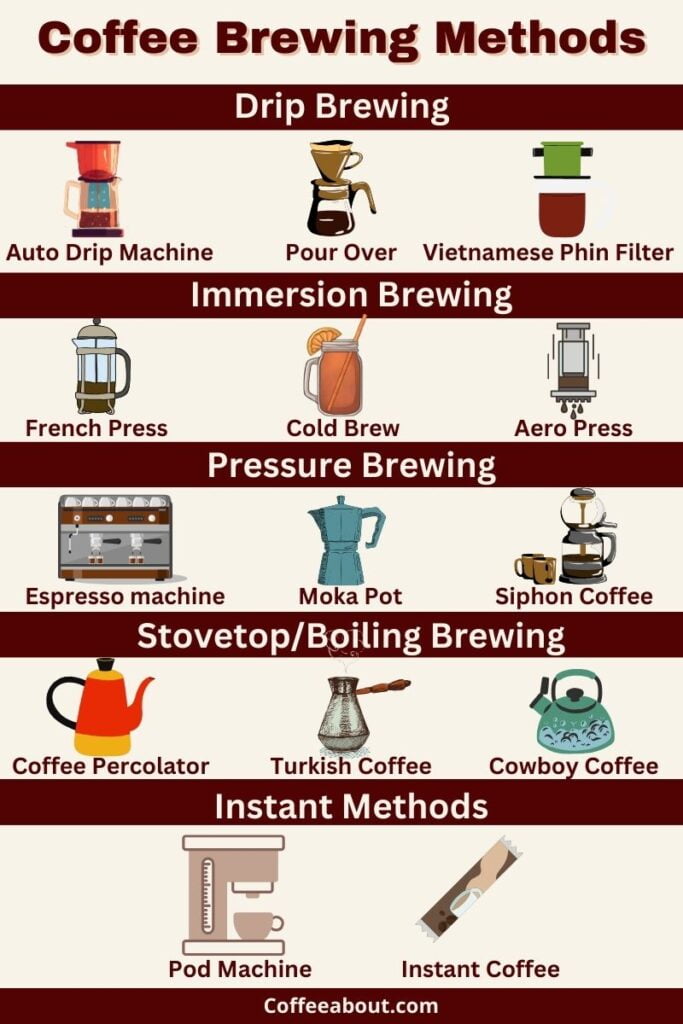
In the diverse landscape of American coffee culture, from the artisanal shops of Portland, Oregon, to the bustling cafes of Miami, Florida, a range of brewing methods has found its dedicated following. Each method is a masterclass in manipulating the variables we've discussed, leading to wonderfully distinct results.
Pour Over
The pour over method, a favorite among coffee enthusiasts, champions control and clarity. It typically uses a medium-fine grind and hot water (195-205°F) carefully poured over a conical filter. The contact time is relatively short (2-4 minutes) and controlled by the pour speed and grind. There's no applied pressure; gravity does the work. This method highlights the coffee's nuanced flavors and aromas, producing a clean, bright cup with a light to medium body.
French Press
A staple in American homes for its simplicity and robust output, the French press is an immersion method. It calls for a coarse grind and a longer contact time (4 minutes or more) with hot water. After steeping, a plunger is pressed down, separating the grounds. There's significant agitation during the initial pour and stirring. The result is a full-bodied, rich cup with more sediment and a less acidic profile, as the natural oils remain in the brew.
Espresso
The bedrock of countless coffee drinks across the U.S., espresso is defined by its fine grind, high pressure (around 9 bars), and very short contact time (20-30 seconds). Water at 195-205°F is forced through the tightly packed grounds, creating a concentrated shot with a thick, golden-brown crema on top. Espresso offers intense flavor, a syrupy body, and serves as the base for lattes, cappuccinos, and Americanos.
Drip Coffee
The quintessential American morning brew, drip coffee is valued for its convenience and consistency. It uses a medium grind, hot water (ideally 195-205°F), and gravity to slowly filter water through a bed of coffee grounds, usually in a paper filter. Contact time is medium (5-8 minutes), dictated by the machine's flow rate. The result is a balanced, clean cup, perfect for daily consumption.
Cold Brew
Gaining immense popularity across the country for its smooth, refreshing qualities, cold brew stands apart with its use of cold or room-temperature water and an exceptionally long contact time (12-24 hours). A very coarse grind is essential. Since heat isn't used, the extraction is slower, producing a concentrated brew with significantly lower acidity and bitterness, often yielding notes of chocolate and nuts.
AeroPress
A versatile favorite among travelers and coffee lovers seeking flexibility, the AeroPress combines elements of immersion and pressure. It can use various grind sizes (medium to fine), water temperatures, and contact times (30 seconds to 2 minutes). After steeping, manual pressure is applied to press the coffee through a filter. This method produces a clean, full-bodied cup that can range from espresso-like concentrates to longer brews.
Moka Pot
Common in homes that appreciate a strong, stove-top brew reminiscent of Italian espresso, the Moka pot uses steam pressure to push boiling water up through a bed of finely ground coffee. The result is a concentrated, strong coffee with a distinctive, robust flavor and texture, though not a true espresso due to lower pressure.

Common Brewing Pitfalls and How to Avoid Them
From coffee veterans in bustling New York City to aspiring home baristas in sunny Los Angeles, everyone encounters challenges when brewing coffee. Understanding common pitfalls can save you from disappointing cups and help you consistently achieve delicious results. The primary issues usually stem from incorrect extraction: either too little or too much.
-
Under-extraction (Sour, Weak Coffee): This happens when not enough flavorful compounds are dissolved from the coffee grounds.
- Symptoms: Your coffee tastes sour (often like unripe fruit), weak, watery, or lacks depth.
- Causes:
- Grind is too coarse: Water passes through too quickly.
- Water temperature is too low: Compounds don't dissolve efficiently.
- Contact time is too short: Not enough time for proper dissolution.
- Insufficient agitation: Water isn't evenly contacting all grounds.
- Solution: Try a finer grind, increase water temperature, extend brew time (if applicable), or ensure better saturation of grounds.
-
Over-extraction (Bitter, Harsh Coffee): This occurs when too many undesirable, bitter compounds are extracted, often after the desirable ones have already dissolved.
- Symptoms: Your coffee tastes excessively bitter, acrid, burnt, or hollow. It might leave an unpleasant dry sensation on your tongue.
- Causes:
- Grind is too fine: Water moves too slowly, leading to prolonged contact.
- Water temperature is too high: Extracts bitter compounds too quickly.
- Contact time is too long: Grounds are exposed to water for too extended a period.
- Excessive agitation: Too much turbulence can over-extract.
- Solution: Try a coarser grind, lower water temperature slightly (within the 195-205°F range), reduce brew time, or use less aggressive agitation.
Beyond extraction, freshness of beans and water quality are critical. Stale coffee beans lose their volatile aromas and flavors quickly, resulting in a flat cup regardless of your brewing method. Similarly, tap water with high chlorine content or extreme mineral levels can negatively impact the taste. Always use fresh, whole beans and filtered water for the best results.

Frequently Asked Questions
Which brewing method is "best"?
There's no single "best" brewing method; it largely depends on your personal taste preferences, the type of coffee experience you seek, and your lifestyle. Espresso offers intensity for milk drinks, pour-over provides clarity, and French press yields a full-bodied cup. The best method is the one that consistently produces a coffee you enjoy.
Does the roast level matter for brewing?
Absolutely. Lighter roasts retain more of the bean's original characteristics, demanding precise brewing to highlight their delicate notes. Darker roasts are more soluble and can be easily over-extracted, often benefiting from slightly coarser grinds or cooler water to prevent bitterness. Always consider the roast profile when choosing your grind and brew parameters.
Can I use tap water for brewing coffee?
While you can use tap water, its quality significantly impacts your coffee's taste. Tap water can contain chlorine, minerals, or other impurities that impart off-flavors. Using filtered water is highly recommended as it allows the true flavors of the coffee to shine through without interference.
How important is a coffee scale?
A coffee scale is incredibly important for consistency. Coffee brewing is a precise science, and measuring your coffee grounds and water by weight (not volume) ensures you're always using the correct ratio. This eliminates a major variable and helps you replicate delicious results or troubleshoot issues effectively.
What's the difference between light and dark roast extraction?
Light roasts are denser and less porous, making their compounds harder to extract. They often require slightly finer grinds, hotter water, and sometimes longer contact times to achieve full flavor. Dark roasts, being more porous and brittle, extract much more easily and can quickly become bitter if over-extracted. They often benefit from slightly coarser grinds and careful management of contact time to prevent bitterness.
Conclusion
Understanding why coffee brewing methods are different unlocks a world of flavor possibilities, moving beyond simply "making coffee" to "crafting a cup." Each method, from the delicate pour-over to the robust French press, meticulously balances grind size, water temperature, contact time, pressure, and agitation to create unique flavor profiles. By appreciating these fundamental principles, you gain the power to not only choose the method that best suits your taste but also to troubleshoot and refine your technique for a consistently exceptional brew.
Your journey into coffee doesn't have to stop here. Experiment with different methods, adjust variables, and pay attention to how each change impacts the final taste. The next step is to grab your favorite beans, try a new method, and truly taste the difference!