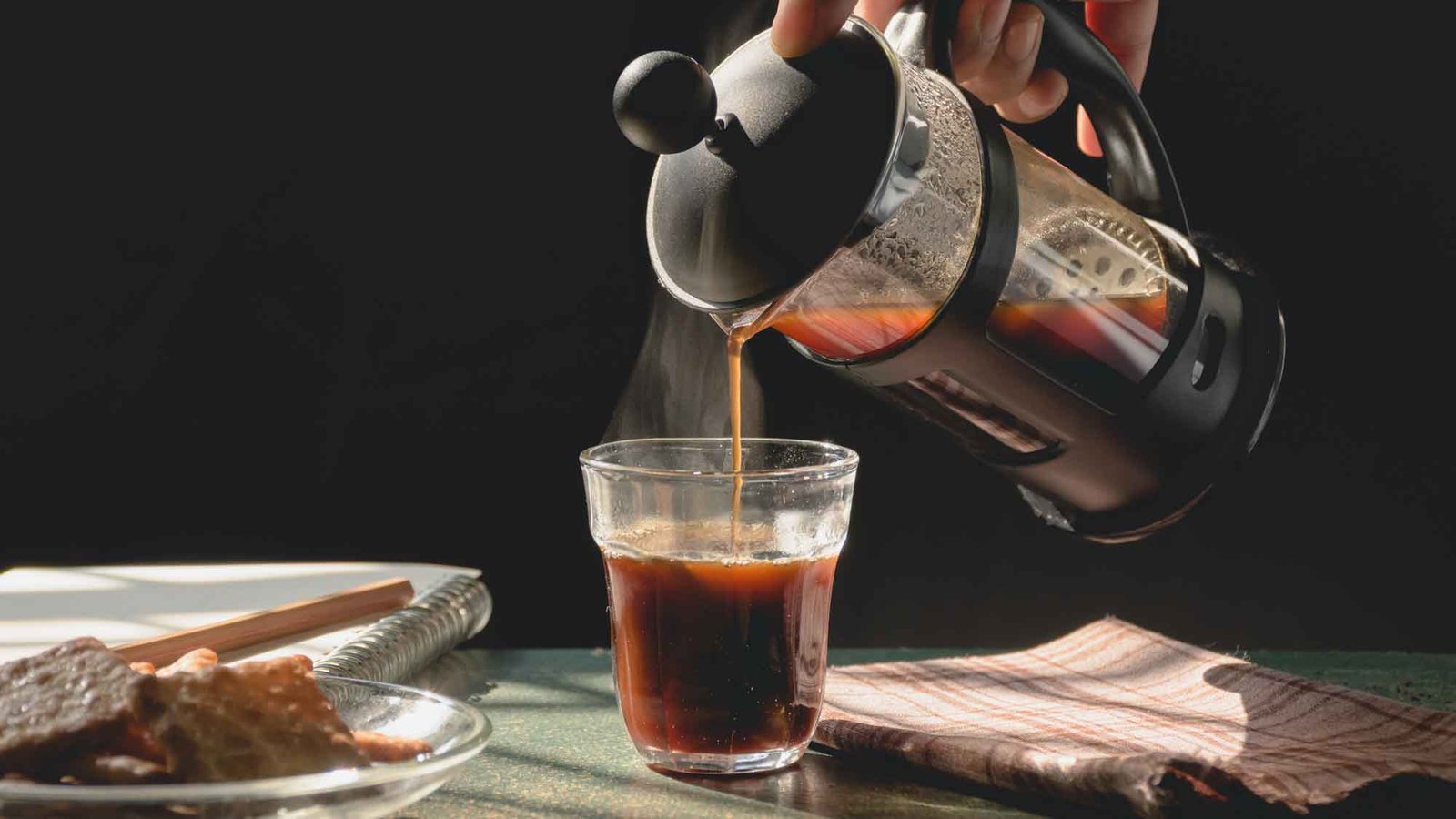
French Press for Beginners: First-Time Coffee Brewers’ Guide
To make coffee with a french press for beginners, use a ratio of 1 gram of coffee for every 15 grams of water and steep for 4 minutes. This guide covers the essential steps, grind sizes, and water temperatures needed to achieve a balanced cup every time you brew.
How the French press works for beginners
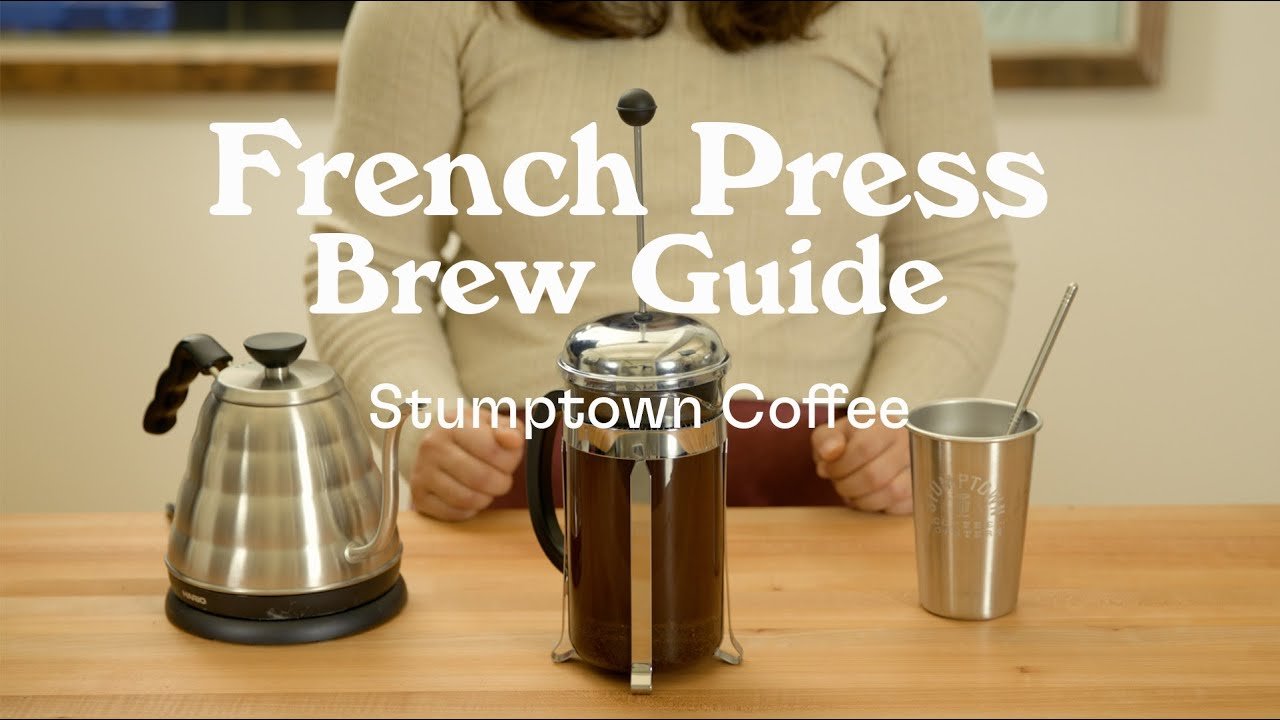
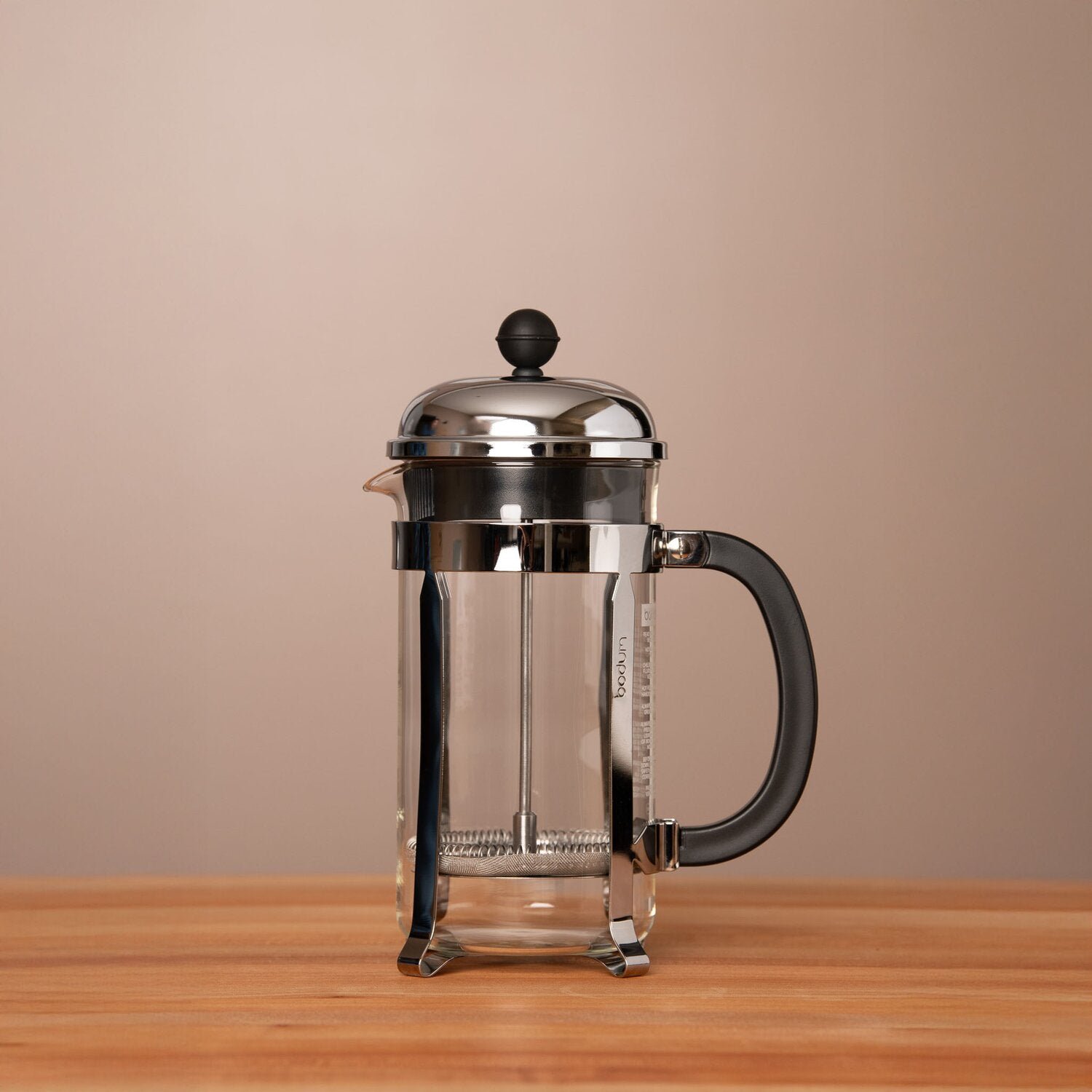
A french press is a simple immersion brewer that uses a metal mesh filter to separate coffee grounds from the finished liquid. Unlike paper filters that remove oils and fine particles, the metal mesh allows these elements into your cup, which creates a heavier, more textured body. It’s a popular tool for those who prefer a bold, rich taste.
How to brew coffee
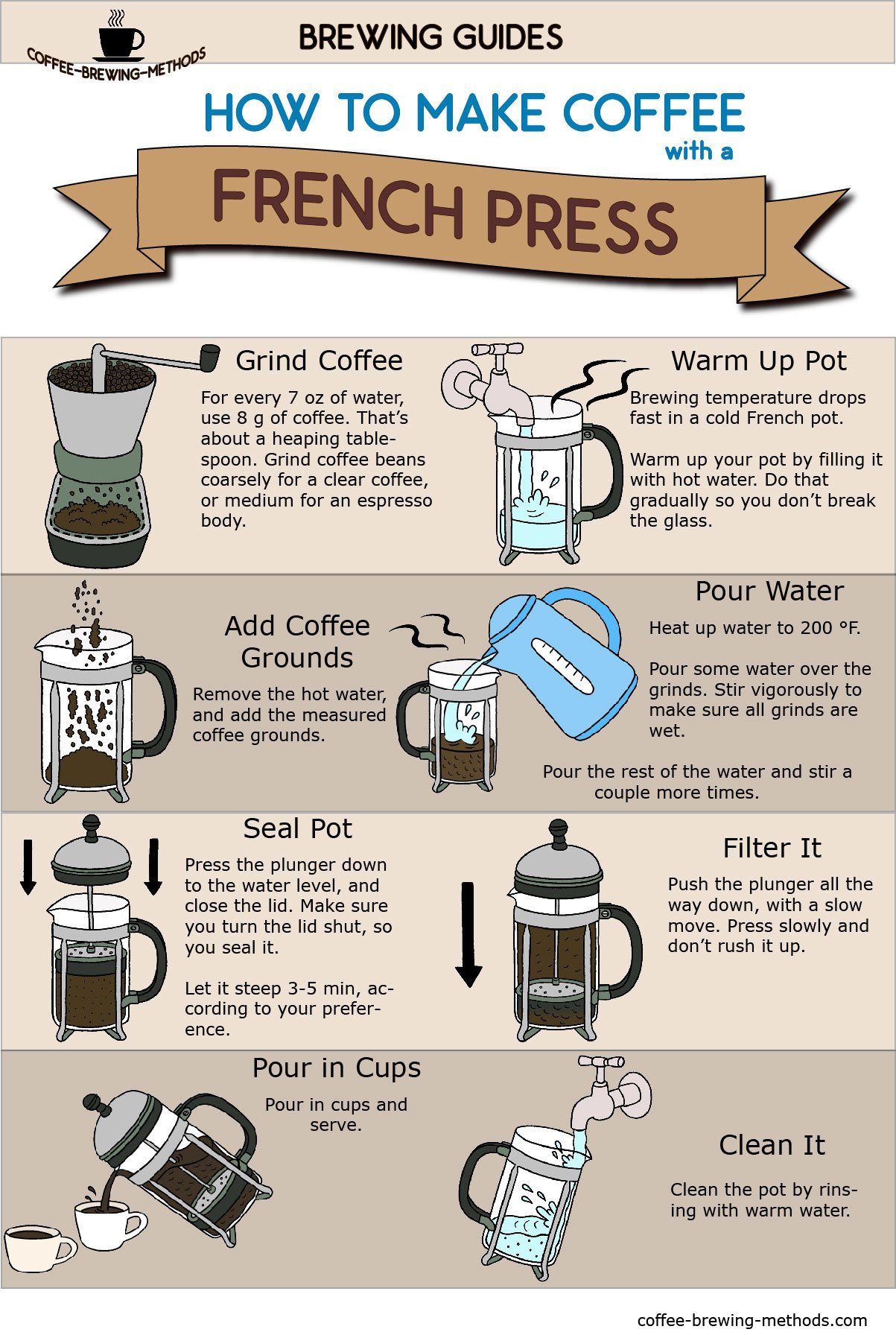
- Preheat your glass carafe by rinsing it with hot water, then discard the water.
- Add your coffee grounds to the bottom of the press using a coarse grind, which should look like sea salt.
- Pour hot water, ideally between 195°F and 205°F, over the grounds until the carafe is full.
- Stir the crust of grounds gently with a wooden or plastic spoon to ensure they’re fully saturated.
- Place the lid on the carafe with the plunger pulled all the way up and let it steep for 4 minutes.
- Press the plunger down slowly and steadily until it reaches the bottom of the container.
- Pour the coffee into your mug immediately to stop the extraction process and prevent over-steeping.
The most important judgement call is the speed of your plunge. If you feel strong resistance, pull the plunger up slightly and then continue to press down slowly; forcing it can cause hot liquid to spray out.
Coffee brewing settings at a glance
Use this table to adjust your process based on your preferences. These settings assume a standard 8-cup (34-ounce) carafe and a medium-roast bean.
| Situation | What to use | How long | What to watch for |
|---|---|---|---|
| Stronger body | 1:12 ratio | 5 minutes | Bitter aftertaste |
| Lighter flavor | 1:17 ratio | 3 minutes | Sour or thin taste |
| Dark roast | 200°F water | 3.5 minutes | Ashy notes |
| Light roast | 205°F water | 4.5 minutes | Lack of sweetness |
| Large volume | 1:15 ratio | 4 minutes | Uneven extraction |
Getting the best results
Experienced brewers focus on the quality of their water and the consistency of their grind. Using filtered water prevents chlorine or mineral buildup from masking the natural flavors of the bean. Grind your coffee immediately before brewing, as it loses aromatic oils quickly when exposed to air.
When you start the timer, avoid leaving the plunger pushed down while the coffee sits in the carafe. Consistency in your grind size is the primary factor in achieving a uniform flavor profile.
Solving common brewing problems
| What you notice | What it usually means | What to do first |
|---|---|---|
| Plunger is hard to push | Grind is too fine | Use a coarser setting |
| Coffee tastes sour | Under-extracted | Increase steep time |
| Coffee is bitter | Over-extracted | Decrease steep time |
| Too much sediment | Mesh damage or fine grind | Check filter for holes |
Safety and handling rules
Handle the glass carafe with care to avoid thermal shock or physical impact. Place the unit on a flat, heat-resistant surface while brewing. If you notice any chips or cracks in the glass, stop using the carafe immediately to prevent injury.
Care and maintenance
Disassemble the mesh filter after each use to remove spent grounds. Wash the carafe and metal parts with warm, soapy water to remove lingering oils. If the mesh screen clogs, soak it in warm soapy water for 10 minutes and scrub gently.
When to avoid this method
If you’re looking for a clean, tea-like cup with high clarity, a paper-filtered pour-over is a better choice. The french press is also not ideal if you’re in a rush, as the cleaning process requires more time than a standard drip machine. Finally, if you have limited counter space, the bulky size of the carafe may be less convenient than a small, handheld brewing device.
Frequently asked questions
Can I use boiling water in my press?
No, boiling water can scorch the coffee grounds and lead to a burnt, bitter taste; aim for 195°F to 205°F to ensure you extract the best flavors from the beans.
How long does the coffee stay hot?
It stays hot for about 15 to 20 minutes in a glass carafe, but you should pour it into a mug or thermal container immediately to prevent the coffee from over-extracting.
Is it safe to leave grounds in the press?
No, leaving the grounds in the press after you have finished brewing will make the coffee extremely bitter and unpleasant to drink within just a few minutes of sitting.
Why is my coffee watery?
Your coffee is likely watery because the grind was too coarse or you didn’t use enough coffee; try a slightly finer grind or increase your coffee-to-water ratio.
How often should I replace the mesh filter?
Replace your mesh filter whenever you notice it’s bent, torn, or no longer fits tightly against the sides of the carafe, as this allows sediment to bypass the filter.
What happens if I use fine grounds?
Using fine grounds will make the plunger very difficult to push down and will result in a gritty, bitter cup of coffee that’s unpleasant to consume.
Conclusion
Mastering the french press takes only a few tries, and once you settle on a grind size and steep time that you enjoy, the process becomes a reliable part of your morning routine. Focus on keeping your equipment clean and your water temperature consistent, and you’ll find that this method offers a level of control that’s hard to match with other brewers.