How Coffee Grinders Work: Grinding Mechanisms Explained
A coffee grinder works inside by breaking down whole coffee beans into smaller, uniform particles through friction and crushing.
Have you ever wondered why your morning cup tastes so much better when you grind your own beans just before brewing? It's not magic, but rather a fascinating process happening inside your coffee grinder. As someone who has spent countless hours experimenting with different beans and brewing methods, I can tell you that understanding how a coffee grinder operates internally is key to unlocking the full potential of your coffee. Join me as we pull back the curtain and explore the intricate mechanisms that transform whole beans into the perfect grinds for your next delicious brew.

Why a Good Grind Matters for Your Coffee
The journey from whole bean to a sublime cup begins with the grind, and its quality dictates everything. Think of it like this: each tiny coffee particle holds a treasure trove of flavor and aroma compounds. When hot water passes through these grounds, it extracts those compounds. If your grind isn't consistent, some particles will be too small, leading to over-extraction and a bitter taste, while others will be too large, resulting in under-extraction and a weak, sour flavor.
Achieving a uniform particle size is the ultimate goal, ensuring that the water extracts flavor evenly from every single particle. I remember my early days, using a cheap blade grinder that pulverized beans into an uneven mix of fine powder and chunky bits. My coffee was always inconsistent – sometimes muddy, sometimes watery. Switching to a proper coffee grinder was a game-changer, immediately elevating my home brewing experience to a whole new level. This consistency is paramount for any brewing method, from a delicate pour-over to a robust espresso.

The Two Main Types of Coffee Grinders
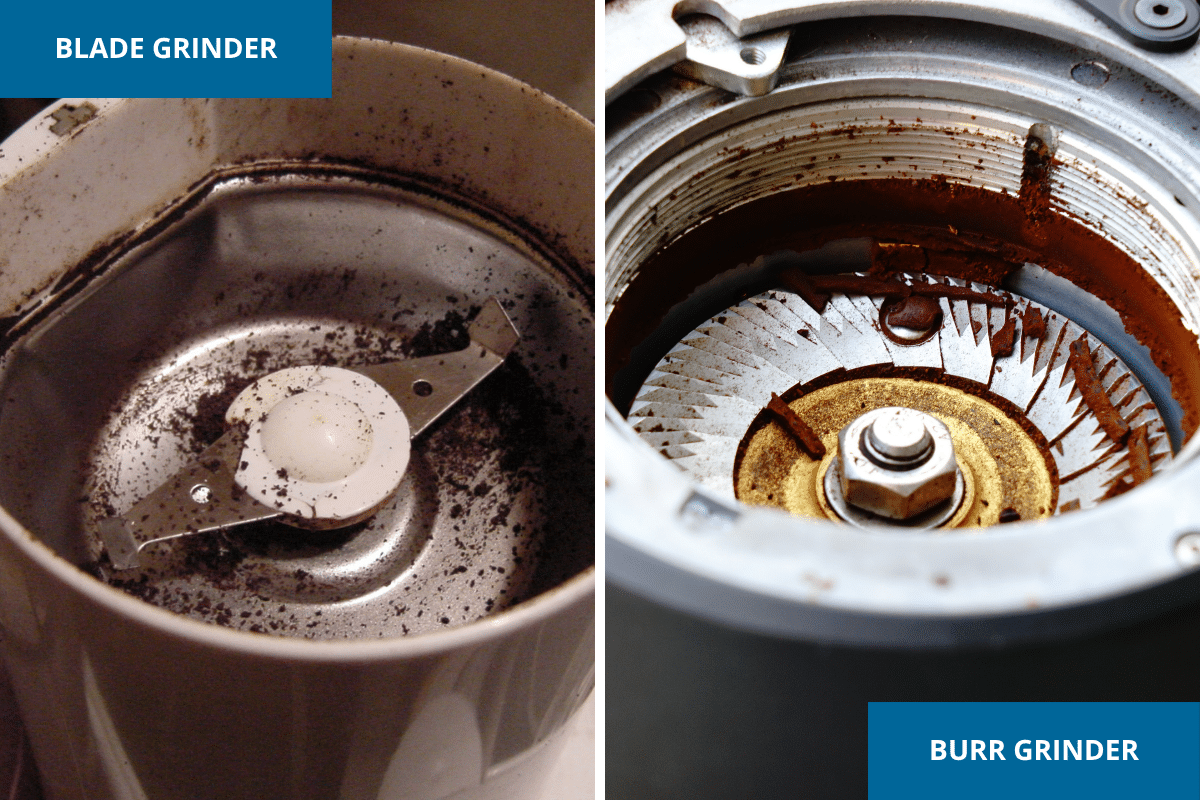
When we talk about how a coffee grinder works, it's crucial to distinguish between the two primary types: burr grinders and blade grinders. Each employs a fundamentally different method to tackle those sturdy coffee beans, with vastly different results.
Burr Grinders
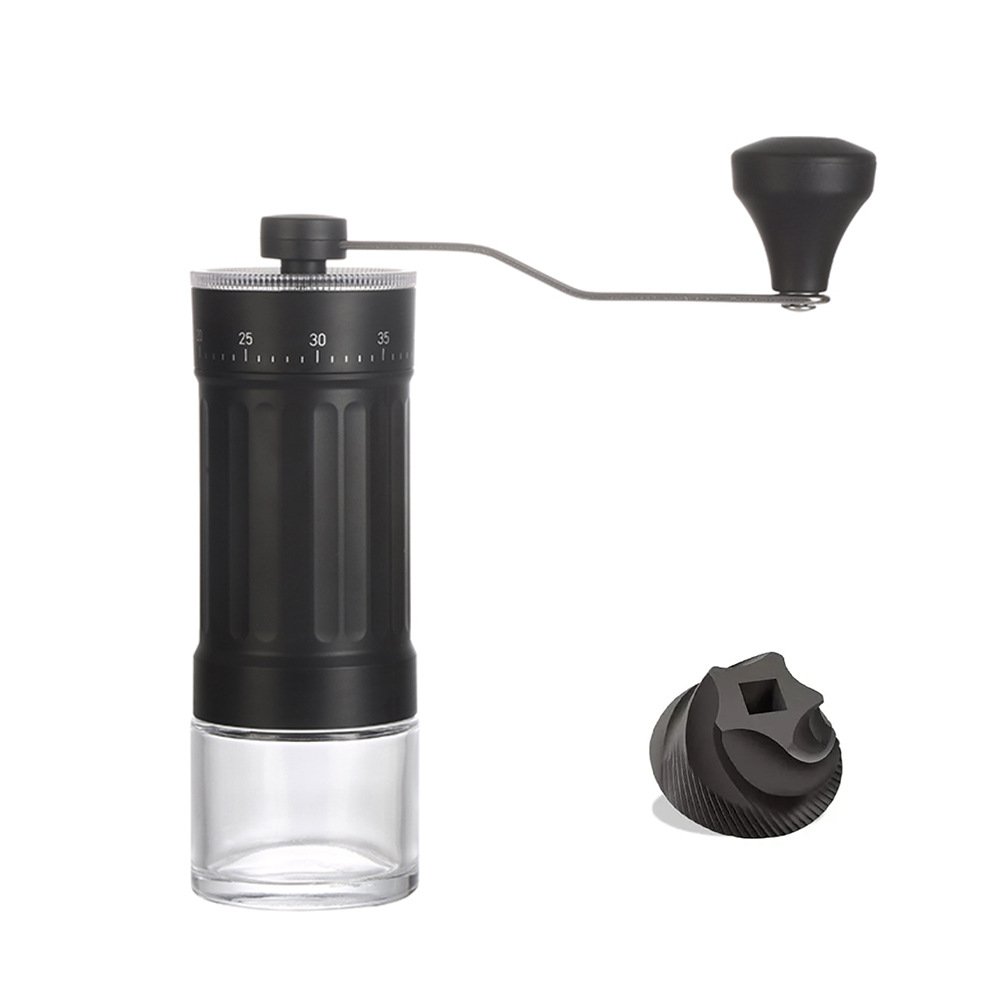
Burr grinders are the gold standard for anyone serious about their coffee, and for good reason. Inside, they feature two abrasive surfaces, often called burrs, which rotate against each other. Whole coffee beans fall between these burrs. As the motor spins one burr, the beans are progressively crushed and ground into a consistent particle size determined by the gap between the two burrs. This gentle, precise grinding action minimizes heat build-up, which is vital because excessive heat can degrade the delicate oils and aromatics in your coffee, leading to a burnt taste.
There are two main styles of burrs:
- Conical burrs: These have a cone-shaped inner burr that sits inside a larger, ring-shaped outer burr. They tend to spin slower, producing a very consistent grind with less noise and heat.
- Flat burrs: These consist of two identical flat, ring-shaped burrs that face each other. Beans are ground as they pass between the flat surfaces. Flat burrs often produce a slightly more uniform particle distribution, though some argue they generate more heat due to faster rotation.
From my own experience, investing in a quality burr coffee grinder was the single best upgrade I made to my coffee setup. The control over grind size is unparalleled, allowing me to dial in the perfect coarseness for espresso, French press, or pour-over, making every cup exactly how I want it.
Blade Grinders
Blade grinders, often found at lower price points, operate more like a propeller-style blender. Inside, they use a spinning blade that rapidly chops and shatters the coffee beans into smaller fragments. Unlike the precise crushing of a burr grinder, this method is uncontrolled and haphazard. The blades don't actually "grind" the coffee; they smash it.
The major drawback of a blade coffee grinder is the severe lack of consistency. You'll end up with a mix of ultra-fine "coffee dust" and much larger chunks. This unevenness leads to poor extraction, resulting in either bitter or sour coffee, or often both in the same cup. Additionally, the high-speed chopping generates a lot of friction and heat, which can "burn" the coffee even before it's brewed, stripping it of its subtle flavors. While they might seem convenient, blade grinders are generally frowned upon by coffee enthusiasts precisely because they can't achieve the consistent grind necessary for truly great coffee.

Diving Deeper: The Inner Workings of a Burr Grinder
To truly understand how a coffee grinder works, let's peek inside a burr grinder, which is the preferred choice for optimal coffee extraction. Each component plays a vital role in delivering that consistent grind.
Motor and Drive Shaft
At the heart of every electric burr coffee grinder is a motor, typically an electric AC or DC motor. This motor provides the power to rotate one of the burrs. The motor is connected to the rotating burr via a drive shaft, which transmits the rotational force. Some high-end grinders feature gear reduction systems that slow down the burr's rotation, which helps reduce heat and static while increasing torque for a smoother grind. The efficiency and quality of this motor directly impact the longevity and performance of the grinder.
The Burrs: Stationary and Rotating
As mentioned, the burrs are the stars of the show. One burr remains stationary, fixed in place, while the other is attached to the drive shaft and rotates. Coffee beans are fed into the gap between these two burrs. Both burrs are designed with precision-cut teeth or ridges that progressively break down the beans. These burrs are commonly made from hardened steel or ceramic. Steel burrs are very sharp and durable, often found in commercial and high-end home grinders. Ceramic burrs are incredibly hard, resistant to wear, and tend to generate less static, though they can be more brittle if dropped. The specific design and material of these burrs are crucial for producing a uniform particle size, which is what makes a burr coffee grinder so effective.
Grind Adjustment Mechanism
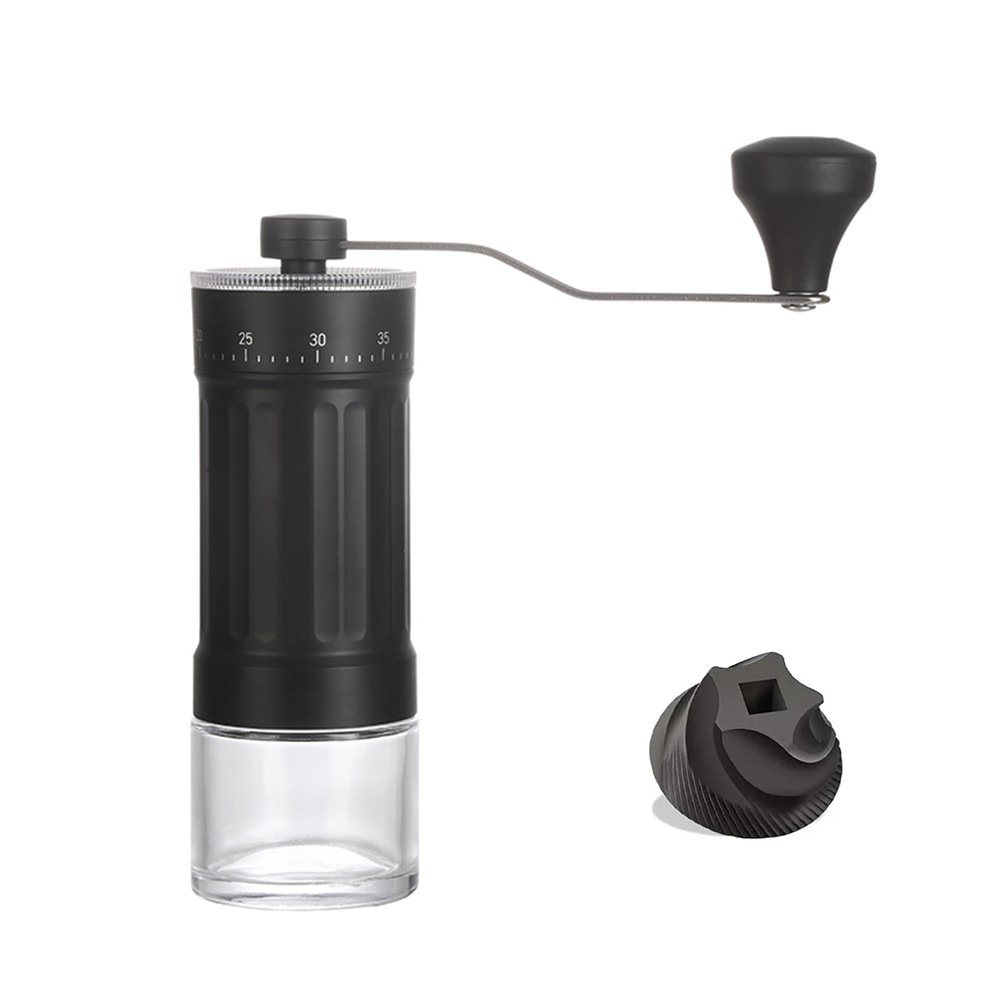
One of the most valuable features of a burr coffee grinder is its ability to precisely adjust the grind size. This mechanism physically changes the distance between the stationary and rotating burrs.
- Stepped grinders have a set number of distinct settings (like clicks on a dial), offering repeatable grind sizes.
- Stepless grinders allow for infinite adjustments, providing extremely fine-tuned control, often favored by espresso enthusiasts who need to make tiny adjustments to perfect their shots.
By widening the gap, you get a coarser grind suitable for a French press. Narrowing the gap produces a finer grind, ideal for espresso. This precise control over particle size is fundamental to matching the grind to your chosen brewing method, directly impacting the contact time between coffee and water and, ultimately, the flavor profile.
Bean Hopper and Ground Coffee Container
The journey of the bean begins in the bean hopper, a container typically at the top of the coffee grinder that holds the whole roasted coffee beans. Gravity feeds these beans down into the grinding chamber where the burrs are located. Once ground, the freshly milled coffee then falls into a receptacle or ground coffee container, ready for brewing. Many grinders are designed to minimize retention, meaning very little old coffee is left in the grinding path, ensuring maximum freshness for each brew.
Safety Features
Modern coffee grinders often incorporate various safety features. These can include mechanisms that prevent the grinder from operating if the bean hopper or ground container isn't properly attached. Some grinders also have thermal cut-offs to prevent the motor from overheating during extended use. These small but important features ensure the safe and reliable operation of your appliance.
Understanding Grind Consistency and Its Impact
Grind consistency is often hailed as the "holy grail" of coffee grinding, and it's truly what sets a high-quality coffee grinder apart. When we talk about consistency, we mean that all the ground coffee particles are as close to the same size as possible. Imagine a pile of sand where every grain is identical – that's the ideal we're aiming for.
Why does this matter so much? Because every brewing method relies on water flowing through the coffee grounds and extracting soluble compounds. If your grind is inconsistent, with a mix of very fine "fines" and much larger "boulders," the water will behave differently. The fines will impede water flow and over-extract quickly, releasing bitter flavors. The boulders will allow water to pass too easily, leading to under-extraction and sour, weak coffee. A uniform grind, on the other hand, allows for an even flow of water and a balanced extraction, resulting in a cup that is neither bitter nor sour, but beautifully nuanced and flavorful. This is the ultimate goal of any good coffee grinder.
Troubleshooting Common Grinder Issues
Even the best coffee grinder can run into issues occasionally. Knowing how to troubleshoot can save you time, money, and your morning coffee!
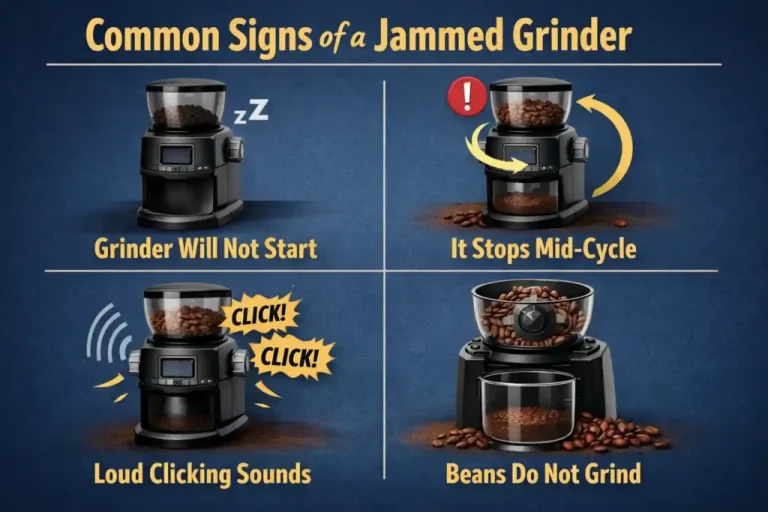
- Grinder jamming: This often happens when you're grinding very dark, oily beans, or if there's a build-up of old coffee oils. First, unplug the grinder. Then, try gently shaking it or using a stiff brush to dislodge any stuck beans or grounds from the burrs. Sometimes, running a few "grinder cleaning tablets" through can also help break down oil buildup.
- Inconsistent grind: If your once-reliable coffee grinder starts producing an uneven grind, it might be time to clean the burrs thoroughly. Old coffee oils can gum up the burrs, affecting their ability to grind precisely. Ensure your burrs aren't worn out; over time, the sharp edges can dull, necessitating replacement.
- Excessive noise: While all grinders make some noise, a sudden increase in rattling or grinding sounds might indicate a loose component or a blockage. Again, check for stuck beans or foreign objects. If the noise persists, it might be a sign of a motor issue or misaligned burrs, which may require professional servicing.
Regular cleaning is the single best way to maintain your coffee grinder. I make it a point to brush out my grinder's burrs weekly, especially after grinding oily beans, and a deeper clean every month or so. This simple routine keeps my coffee grinder running smoothly and ensures my coffee always tastes its best.
Frequently Asked Questions
What's the main difference between burr and blade coffee grinders?
The main difference is how they process beans: burr grinders crush beans uniformly between abrasive surfaces, while blade grinders chop them haphazardly with spinning blades, leading to inconsistent particle sizes. Burr grinders are essential for quality coffee.
How does grind size affect coffee flavor?
Grind size directly impacts extraction. A fine grind increases surface area and contact time, leading to stronger extraction, ideal for espresso. A coarse grind reduces contact time and prevents over-extraction, perfect for French press.
Can I use a coffee grinder for spices?
While some people do, it's generally not recommended, especially if you also use it for coffee. Spices can leave strong, lingering odors and flavors that will transfer to your coffee, compromising its taste.
How often should I clean my coffee grinder?
For optimal performance and flavor, you should ideally brush out your burr grinder weekly, especially if you grind daily. A deeper clean, involving disassembling and scrubbing the burrs, is recommended monthly or bi-monthly.
What are ceramic burrs versus steel burrs?
Ceramic burrs are very hard, resistant to wear, and generate less static, but can be brittle. Steel burrs are durable, sharp, and widely used, often seen in high-performance grinders, and can be more resistant to impact.
Why is consistent grind so important for brewing?
Consistent grind ensures that all coffee particles extract at roughly the same rate when water passes through them. This prevents both under-extraction (sour, weak coffee) and over-extraction (bitter coffee) from occurring simultaneously in your brew.
Conclusion
Peeking inside the complex world of the coffee grinder reveals just how much precision goes into your daily cup. Understanding the intricate dance between burrs, motors, and grind settings empowers you to take control of your coffee experience, transforming simple beans into liquid gold. It's truly a testament to how the right tool, correctly understood and maintained, can elevate an everyday ritual into an art form.
Don't settle for mediocre coffee; elevate your brewing game by understanding and appreciating the magic happening within your coffee grinder. I encourage you to experiment with grind settings for different brewing methods, meticulously clean your grinder, and truly taste the difference a uniform grind makes. Share your insights or questions in the comments below, and let's continue to explore the wonderful world of coffee together!