Why Does My Coffee Taste Like Nothing: Fix Flavorless Brews
Your coffee tastes like nothing due to stale beans, improper grind, incorrect water temperature, or poor brewing technique.
There’s nothing quite as disappointing as anticipating that first sip of rich, aromatic coffee, only to be met with a bland, watery, or completely "flavorless" brew. It's a common frustration for many coffee lovers, myself included, and often leaves us wondering, "Why does my coffee taste like nothing?" This isn't just a minor annoyance; it's a fundamental breakdown in the very experience we seek. As someone who has spent years perfecting my coffee craft, I understand the disheartening feeling of a truly flavorless cup. But don't despair – troubleshooting "flavorless" brews is often simpler than you think. In this comprehensive guide, we’ll dive deep into the science and art of coffee to uncover the root causes of why your coffee tastes like nothing and provide actionable solutions to bring back that delicious depth you crave.
The Core Culprits: Why Your Coffee Tastes Like Nothing
When your coffee tastes like nothing, it’s usually a signal that something went awry during the journey from bean to cup. Identifying these core issues is the first step in troubleshooting "flavorless" brews and restoring your coffee's vibrancy. Often, it comes down to a few critical factors that are easy to overlook.
Bean Quality and Freshness
This is arguably the most significant factor. Coffee is an agricultural product, and like any produce, it has a peak freshness period.
- Stale Beans: Once roasted, coffee beans begin to degas and oxidize. Over time, the volatile aromatic compounds that give coffee its complex flavor evaporate, leaving you with coffee that tastes like nothing. If your beans were roasted months ago, they're likely past their prime. I remember when I first started my coffee journey, I bought large bags of beans thinking I was getting a deal, only to realize that by the time I got to the bottom, my coffee tasted like nothing.
- Pre-ground Coffee: Grinding coffee significantly increases its surface area, accelerating the staling process. Pre-ground coffee, while convenient, loses its flavor much faster than whole beans.
- Poor Storage: Exposure to air, light, heat, and moisture are enemies of coffee freshness. If your beans are stored in a clear container on the counter, they're aging rapidly.
Grind Size and Consistency
The grind size dramatically impacts extraction, which is how much flavor is pulled from the coffee grounds by hot water.
- Too Coarse (Under-extraction): If your grind is too coarse, the water flows through too quickly, not having enough time to extract sufficient flavor compounds. This results in an under-extracted brew that often tastes weak, watery, or even sour, contributing to the feeling that your coffee tastes like nothing.
- Too Fine (Over-extraction): Conversely, a grind that's too fine can lead to over-extraction, pulling out bitter, acrid compounds, and often leaving the desirable flavors behind, making the coffee taste hollow or "flavorless" in a different way.
- Inconsistent Grind: A grinder that produces varying particle sizes means some particles will be over-extracted while others are under-extracted, leading to a muddled and disappointing cup.
Water Quality and Temperature
Water isn't just a solvent; it's an ingredient, making up over 98% of your coffee.
- Poor Water Quality: Tap water can contain chlorine, minerals, or off-flavors that directly interfere with coffee's taste. If your water tastes bad, your coffee will likely taste bad or, worse, taste like nothing. Filtered water is almost always a superior choice.
- Incorrect Water Temperature: The ideal brewing temperature range is typically between 195°F and 205°F (90°C to 96°C). Water that's too cool will under-extract the coffee, leading to a weak and flavorless cup. Water that's too hot can scorch the grounds, extracting bitter compounds and leaving the desirable flavors subdued, leading to coffee that tastes like nothing.
Brewing Technique and Equipment
Even with fresh beans and good water, poor technique can ruin a brew.
- Incorrect Coffee-to-Water Ratio: Too little coffee for the amount of water will result in a weak, diluted cup. Too much coffee can lead to over-extraction and bitterness, masking genuine flavors. A general starting point is a 1:15 to 1:18 coffee-to-water ratio.
- Inadequate Contact Time: The duration the water is in contact with the coffee grounds is crucial. Too short (like with a coarse grind) results in under-extraction; too long (like with a fine grind or too much turbulence) can lead to over-extraction.
- Dirty Equipment: Old coffee oils and residue can accumulate in your brewer, grinder, or filters, imparting stale, bitter, or off-flavors to your fresh brew. Regularly cleaning your equipment is paramount for delicious coffee.
- Filter Type: The type of filter you use (paper, metal, cloth) can also subtly affect the taste and body of your coffee, though less directly leading to coffee that tastes like nothing.

Understanding Extraction: The Science Behind Flavor
At the heart of why your coffee tastes like nothing lies the concept of extraction. This is the process where hot water dissolves soluble compounds from the ground coffee. Getting it right means a delicious, balanced cup; getting it wrong leads to brews that are either too weak, too bitter, or truly flavorless coffee.
What exactly is coffee extraction? Coffee extraction refers to the process of dissolving desirable flavor compounds, acids, and oils from ground coffee into water during brewing. It's a delicate balance of time, temperature, turbulence, and grind size.
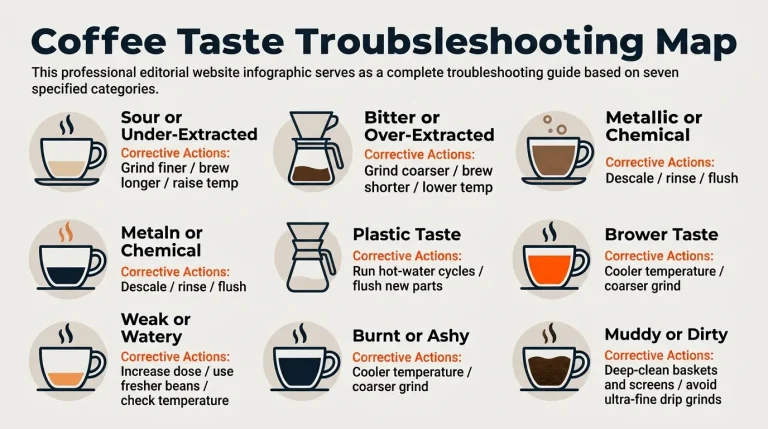
Under-Extraction: Sour and Watery
When your coffee is under-extracted, it means that the water hasn't dissolved enough of the desirable compounds from the coffee grounds. Think of it like trying to get sugar to dissolve in cold water – it just doesn't work very well.
- Causes: Common culprits include too coarse a grind, too little contact time between water and coffee, water that isn't hot enough, or an insufficient coffee-to-water ratio.
- Effects: The resulting brew often tastes sour, thin, watery, and lacks body. You might notice a sharp, lemony acidity without any balancing sweetness. This is a classic sign of coffee that tastes like nothing, as the complex flavors haven't had a chance to develop.
- How to Fix: Try grinding finer, increasing your brew time, ensuring your water is at the optimal temperature (195-205°F), or increasing your coffee dose slightly.
Over-Extraction: Bitter and Hollow
On the flip side, over-extraction occurs when the water has pulled out too many compounds, including the less desirable ones. This happens when the water spends too much time with the coffee, or the grind is too fine, forcing too much interaction.
- Causes: These often include too fine a grind, excessive contact time, water that is too hot, or even too much turbulence during brewing.
- Effects: An over-extracted cup tends to be intensely bitter, astringent (drying sensation in your mouth), and can taste hollow or lacking in the bright, nuanced flavors. While it has a strong taste, it's not a good taste, leading to the perception that your coffee tastes like nothing enjoyable. The desirable sweetness and acidity are overshadowed by overwhelming bitterness.
- How to Fix: Try grinding coarser, reducing your brew time, lowering your water temperature slightly (within the optimal range), or reducing agitation during brewing.

Your Brewing Arsenal: Equipment Matters
The tools you use to make your coffee play a significant role in preventing that "flavorless" brew. Investing in the right equipment and maintaining it properly is essential for consistently delicious results. It's not just about the beans; how you process them is equally crucial for avoiding coffee that tastes like nothing.
The Grinder: A Foundation of Flavor
This is arguably the most underrated piece of coffee equipment, yet it has a profound impact on why your coffee tastes like nothing or not.
- Burr vs. Blade Grinders: Blade grinders essentially "chop" coffee beans, creating an inconsistent mix of fine dust and large chunks. This inconsistency leads to uneven extraction, where some particles are over-extracted and others under-extracted, resulting in a muddled, often flavorless coffee. A burr grinder, on the other hand, crushes beans between two abrasive surfaces, producing a uniform grind size crucial for even extraction and a flavorful cup.
- Consistency is Key: A consistent grind allows the water to extract flavor evenly from all coffee particles. Without this, you're fighting an uphill battle against coffee that tastes like nothing. Experts agree that a good burr grinder is one of the best investments you can make.
Brewing Device: Matching Method to Bean
Different brewing methods are designed to highlight different aspects of coffee flavor. While no single device is "best," choosing one that suits your preferences and understanding its nuances can prevent flavorless brews.
- Drip Coffee Makers: Convenient, but often struggle with consistent temperature and flow rate. Look for models with showerhead dispersion and temperature control to avoid coffee that tastes like nothing.
- Pour-Over (e.g., Hario V60, Chemex): Offers precise control over water temperature, flow rate, and contact time. This method can yield incredibly clean, nuanced cups, but demands attention to technique. If done poorly, you can easily end up with coffee that tastes like nothing.
- French Press: Immersion brewing results in a full-bodied cup with more sediment. Grind size is critical here; too fine and it's sludgy, too coarse and your coffee tastes like nothing.
- Espresso Machines: High pressure and fine grind are key. A poorly dialed-in espresso shot will definitely taste like nothing or intensely bitter.
Do expensive coffee makers really make a difference? While you don't need the absolute priciest gear, quality coffee makers, especially those with precise temperature control and even water dispersion, often provide more consistent and superior results than basic models, significantly reducing the chances of a "flavorless" brew.
Water Filtration: The Unsung Hero
As discussed, water quality is paramount.
- Why it's Crucial: Chemicals like chlorine can strip away coffee's delicate flavors, making your coffee taste like nothing. Hard water, rich in minerals, can also interfere with extraction, preventing the full flavor potential from emerging.
- Solutions: A simple charcoal filter pitcher or a more advanced faucet filter can make a world of difference. In my years of brewing, I’ve found that using filtered water consistently improves the clarity and vibrancy of my coffee, making a significant impact on avoiding coffee that tastes like nothing.

Advanced Troubleshooting: Beyond the Basics
Sometimes, the answer to "Why does my coffee taste like nothing?" isn't immediately obvious. Delving into more nuanced factors can uncover the subtle reasons behind a disappointing brew, especially when you've seemingly addressed the basic issues.
Roast Profile and Bean Origin
The characteristics of the beans themselves play a huge role.
- Light vs. Dark Roasts: Lighter roasts retain more of the bean's original, delicate flavors and acidity, while darker roasts develop more roasty, smoky, and bittersweet notes. If you're expecting a bold, chocolatey flavor from a light roast or subtle fruit notes from a dark roast, you might perceive it as coffee that tastes like nothing, simply because it's not what you anticipated. Understanding the roast profile helps set expectations.
- Single Origin vs. Blends: Single-origin coffees often showcase distinct characteristics of their region (e.g., Ethiopian coffees can be fruity, Colombian coffees often nutty). Blends are crafted to create a balanced, consistent flavor profile. If you're used to robust blends and switch to a delicate single-origin without adjusting your palate, it might seem like your coffee tastes like nothing.
Storage Solutions: Keeping Beans Prime
Even the best beans will degrade quickly if not stored correctly. This is where personal insights come in handy.
- Air-tight Containers: Oxygen is the enemy of fresh coffee. Store your beans in an opaque, airtight container. Vacuum-sealed containers are even better.
- Cool, Dark Place: Heat and light accelerate staling. Avoid storing coffee near ovens, in direct sunlight, or in clear canisters on your counter. I learned this the hard way when I left a bag of my favorite beans exposed to the morning sun; the resulting brew definitely tasted like nothing compared to its usual vibrancy.
- Freezing? Proceed with Caution: Freezing whole beans can extend their life, but only if done correctly. Freeze them in small, airtight portions, and don't thaw and refreeze repeatedly, as moisture can damage cell structure. For daily use, buy smaller quantities more frequently.
Palate Fatigue and Sensory Perception
Sometimes, the issue isn't the coffee at all, but your own senses.
- Palate Fatigue: Drinking too much coffee or eating strong-flavored foods beforehand can dull your taste buds. This can make even a perfectly brewed cup taste like nothing to you.
- Olfactory Fatigue: Your sense of smell is intricately linked to taste. If you're constantly exposed to a strong aroma (like coffee itself), your brain can start to filter it out.
- Illness or Allergies: Congestion from a cold or allergies can significantly impair your ability to smell and taste. If you're feeling under the weather, it's highly likely your coffee will taste like nothing.
Can my sense of smell affect how coffee tastes? Absolutely, your sense of smell is crucial for perceiving coffee's complex aromas and flavors. When your nose is blocked or fatigued, the perception of taste diminishes significantly, often making your coffee taste like nothing more than hot water.

Frequently Asked Questions
Why does my coffee consistently taste bitter?
Consistent bitterness usually points to over-extraction. Try grinding your coffee slightly coarser, reducing your brewing time, or ensuring your water temperature isn't too high.
How often should I clean my coffee maker?
You should rinse your brew basket and carafe after every use. For a deeper clean to remove mineral buildup and coffee oils, aim to descale your coffee maker every 1-3 months, depending on your water hardness and usage.
Does the type of water I use really matter for coffee flavor?
Yes, absolutely. Water quality is paramount because coffee is 98% water. Using filtered water free of chlorine and excessive minerals can dramatically improve your coffee's flavor, preventing it from tasting like nothing.
What is the ideal coffee-to-water ratio?
A widely accepted starting point for drip and pour-over methods is the "golden ratio" of 1:15 to 1:18 (grams of coffee to grams of water). Experiment within this range to find your preferred strength.
Can old coffee beans make my coffee taste sour?
Yes, stale coffee beans can often lead to a sour or bland taste, contributing to the perception that your coffee tastes like nothing. As beans age, desirable compounds degrade, leaving behind less palatable flavors during extraction.
Conclusion
Understanding why your coffee tastes like nothing is the first step toward transforming your daily brew into an exceptional experience. From the freshness of your beans to the precision of your grind, and the quality of your water to the nuances of your brewing technique, every element plays a vital role. By systematically troubleshooting these factors – investing in fresh, quality beans, ensuring an appropriate grind, using filtered water at the right temperature, and maintaining clean equipment – you can unlock the true potential of your coffee.
Don't settle for "flavorless" brews any longer. Take these insights and start experimenting with your own setup. The journey to a perfectly balanced, aromatic cup is a rewarding one. Share your troubleshooting successes in the comments below, or explore our other guides for more tips on elevating your coffee game!