How to Judge Coffee Grinder Quality: Expert Buying Guide
High-quality coffee grinders feature durable burrs, consistent grind settings, and robust build for superior flavor.
Choosing the right coffee grinder is perhaps the single most impactful decision you can make for elevating your home brewing experience. Forget fancy machines for a moment; the truth is, even the most expensive espresso maker or pour-over setup will struggle to produce great coffee if the grind isn't just right. As someone who has spent years immersed in the world of coffee, from pulling shots behind the bar to meticulously experimenting with various home setups, I can tell you that understanding how to judge coffee grinder quality before buying is absolutely essential. It's about more than just a price tag; it's about discerning the engineering, materials, and design that truly make a difference in your cup.
The Heart of the Grind: Burr Type Matters
When you're looking at how to judge coffee grinder quality, the first thing to consider is the burr type. Burrs are the grinding mechanism, and they come in two main forms: conical and flat. Each has its own strengths and weaknesses, influencing everything from grind consistency to heat generation.
Conical burrs consist of two cone-shaped burrs that fit inside each other. They operate at a lower RPM, which generally means less heat buildup during grinding. This is great for preserving the delicate aromatics of your coffee beans. Many enthusiasts find that conical burrs produce a slightly more varied grind particle size, which some believe contributes to a complex flavor profile, especially for espresso. When I first started experimenting with home espresso, upgrading to a grinder with quality conical burrs made an immediate and noticeable difference in shot quality.
Flat burrs, on the other hand, feature two parallel, ring-shaped burrs. Coffee beans are fed between them and ground as they move outwards. Flat burrs typically produce a very uniform particle size, which can lead to a cleaner, brighter cup profile, particularly for pour-over and drip coffee. However, they often run at higher RPMs and can generate more heat, which can sometimes impact flavor if the grinder isn't well-designed. Personally, I've found flat burrs excel at bringing out the crisp notes in single-origin coffees. Ultimately, the best burr type for you depends on your preferred brewing methods and taste preferences, but understanding these differences is a fundamental step in judging coffee grinder quality.
Material World: Stainless Steel vs. Ceramic Burrs
Once you've decided on conical or flat, the next crucial factor in judging coffee grinder quality is the material of those burrs. The choice between stainless steel and ceramic burrs directly impacts durability, sharpness, and even the flavor of your coffee over time.
Stainless steel burrs are incredibly common and popular for a good reason. They are sharp, efficient, and can cut through coffee beans quickly, which is why many commercial grinders use them. They tend to be more precise in their grind, offering a cleaner cut. However, steel burrs can dull over many years of use, and they might generate slightly more static electricity, causing some grounds to stick. From my experience, a well-maintained steel burr grinder offers excellent longevity and consistent performance.
Ceramic burrs are known for their exceptional durability and resistance to wear. They stay sharp for a very long time, often outlasting steel burrs. Ceramic burrs also tend to generate less heat during grinding, which is a significant plus for preserving the delicate aromas of your coffee. The downside is that they can be more brittle and might chip if a foreign object, like a small stone sometimes found in coffee beans, accidentally makes its way into the grinder. When evaluating coffee grinder quality, consider your usage frequency and tolerance for potential breakage against the benefits of longevity and low heat.

Consistency is Key: Grind Settings and Uniformity
The true hallmark of excellent coffee grinder quality lies in its ability to produce a consistent and uniform grind. Uneven particles—some too fine, some too coarse—lead to erratic extraction, resulting in a cup that tastes either bitter (from over-extracted fines) or sour (from under-extracted coarses), or a combination of both.
A high-quality grinder will offer a wide range of grind settings, allowing you to fine-tune for any brewing method, from Turkish coffee to French press. More importantly, these settings should be reliable and repeatable. Look for grinders with a precise adjustment mechanism, whether it's stepped (click-by-click adjustments) or stepless (infinite adjustments). Stepless grinders often appeal to espresso enthusiasts who need minute changes for dialing in a shot.
When assessing coffee grinder quality, you can often visually inspect the grind consistency. Grind a small batch and spread it out on a white surface. If you see a lot of "fines" (dust-like particles) alongside much larger chunks, that's a red flag. The goal is a collection of particles that are as close in size as possible. I once bought a budget grinder early in my coffee journey that claimed many settings, but the output was always a mix of dust and boulders. It taught me a valuable lesson: consistency isn't just a buzzword; it's the foundation of great coffee.
Beyond the Burrs: Motor and Build Quality
While the burrs are undoubtedly critical, the motor and overall build quality significantly impact the performance and lifespan of any coffee grinder. A powerful and efficient motor ensures that the burrs can grind beans smoothly without straining or overheating, contributing directly to the grinder's reliability.
Look for grinders that feature a robust motor, often with gear reduction. Gear reduction allows the burrs to spin at a slower RPM while maintaining torque, which further reduces heat and noise. Direct drive motors, while potentially faster, can sometimes lead to more heat buildup. The housing material also plays a role in coffee grinder quality. Grinders with metal casings tend to be more durable and stable, absorbing vibrations better than those made primarily of plastic. A heavier base indicates stability, preventing the grinder from "walking" across your counter during use.
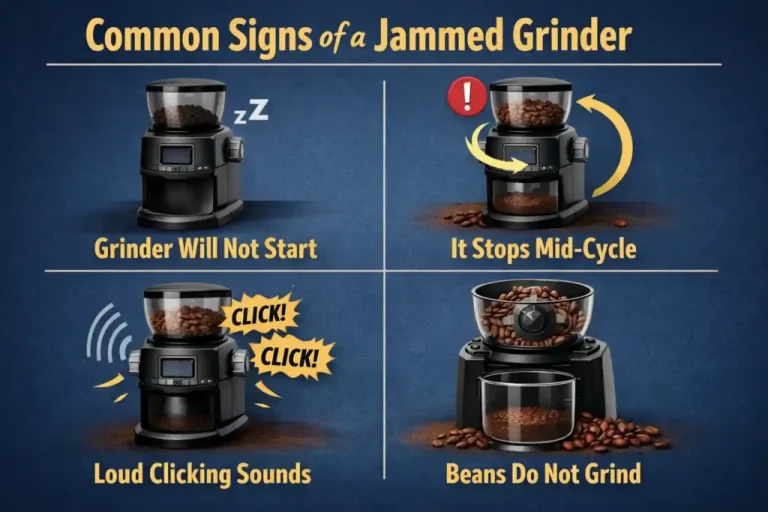
I've seen firsthand how a cheap, underpowered motor can choke on darker, oilier beans, leading to frustrating jams and inconsistent grinds. Investing in a grinder with a well-engineered motor and solid construction means less frustration, fewer breakdowns, and a more enjoyable grinding experience for years to come. This attention to detail in construction is a clear indicator of superior coffee grinder quality.
Practicality and Longevity: Ease of Use and Cleaning
A fantastic grinder is only truly fantastic if it's practical to live with. Ease of use and cleaning are often overlooked aspects when people evaluate coffee grinder quality, but they're vital for maintaining performance and hygiene. After all, residual coffee oils can turn rancid and taint the flavor of your fresh beans.
Consider the design of the bean hopper and the ground coffee bin. Are they easy to access and remove? Does the hopper have an airtight seal to keep beans fresh? A static-reducing design in the ground bin is also a huge plus, minimizing mess on your counter. For cleaning, can you easily disassemble the burrs without needing specialized tools? Many high-quality grinders are designed for straightforward access to the burr chamber, allowing you to brush away stale grounds and oils.
My personal tip: always clean your grinder regularly! Even the best coffee grinder quality will degrade if neglected. A build-up of old coffee can introduce bitterness and off-flavors to your brew. Look for models with easily removable top burrs for simple brushing. This proactive maintenance will ensure your grinder continues to perform at its peak, providing you with delicious coffee day after day.

A Quiet Grind: Noise Levels and Experience
While perhaps not directly impacting the taste of your coffee, the noise level of a grinder significantly affects the user experience, especially in a home setting. No one wants to wake up the whole house just to grind their morning beans. When you're assessing coffee grinder quality, give some thought to how loud it might be.
The main culprits for noise are the motor and the grinding action itself. Grinders with powerful, efficient motors that operate at lower RPMs tend to be quieter. Good internal dampening and a solid build material (like metal) can also help to absorb vibrations and reduce overall noise. Some manufacturers even design their burr sets to minimize harsh grinding sounds.
I remember once owning a particularly raucous grinder that sounded like a jet engine taking off. It made my peaceful morning ritual feel like a chore. Upgrading to a quieter model, even one with similar grind quality, completely transformed my experience. While a certain amount of noise is unavoidable with any grinder, a sign of good coffee grinder quality is a machine that operates with a low, consistent hum rather than a shrill, rattling roar.
The Price Tag Paradox: Value and Investment
It’s easy to get caught up in the allure of the cheapest or most expensive option, but learning how to judge coffee grinder quality involves understanding the value proposition. A higher price often (though not always) correlates with superior materials, engineering, and longevity.
Think of a coffee grinder as an investment in your daily coffee ritual. A well-built grinder with durable burrs and a robust motor can last for many years, potentially saving you money in the long run compared to repeatedly replacing cheaper models that quickly break down or perform poorly. Consider the cost-per-use over its lifespan. While a budget blade grinder might be under $50, it won't deliver the coffee grinder quality needed for excellent results and will likely need frequent replacement. On the other hand, a $300-$500 burr grinder, while a larger initial outlay, could perform flawlessly for a decade or more.
Also, factor in warranty and customer support. Reputable brands that stand behind their products are usually a good indicator of overall coffee grinder quality. A solid warranty provides peace of mind and reflects the manufacturer's confidence in their product's durability. Don't just look at the upfront cost; consider the total value and longevity it brings to your brewing setup.
My Personal Take: Testing Grinders in the Real World
Over my years in the coffee industry, I've had the opportunity to use, test, and even troubleshoot countless grinders. One common mistake I've seen, and made myself, is underestimating the impact of the grinder on the final cup. Early in my career, I focused heavily on the brewing machine, only to realize that a consistent grind from a high-quality machine was the true game-changer. I once upgraded my home grinder from a cheap blade model to a mid-range conical burr grinder, and the difference in flavor and consistency was so dramatic it felt like I was drinking an entirely new type of coffee.
Another lesson learned: don't be swayed solely by fancy features you won't use. While some grinders boast Bluetooth connectivity or elaborate digital displays, the core coffee grinder quality comes down to the burrs, motor, and build. I remember a particularly sleek-looking grinder that had every bell and whistle but produced a terribly inconsistent grind, making it essentially useless for good espresso.
My practical tip for anyone looking to buy: Read reviews from multiple sources, but also trust your gut and, if possible, try one out. Visit a local coffee shop or a friend who has a good setup. Feel the weight, listen to the motor, and look at the grind quality. This hands-on approach, combined with the technical knowledge we've discussed, will give you the most confidence in how to judge coffee grinder quality before buying. It’s a foundational piece of equipment that genuinely makes all the difference in your daily ritual.

Frequently Asked Questions of How to Judge Coffee Grinder Quality Before Buying
What's the main difference between blade and burr grinders?
Blade grinders chop coffee beans unevenly, creating inconsistent particle sizes, while burr grinders mill beans between two abrasive surfaces, resulting in a uniform grind essential for good coffee. Burr grinders offer superior coffee grinder quality and flavor.
Are more grind settings always better?
Not necessarily. While a wider range of settings is helpful for different brewing methods, the consistency of the grind at each setting is more important than the sheer number of options. A high-quality grinder provides precise and repeatable adjustments.
How much should I spend on a good coffee grinder?
For decent coffee grinder quality, expect to spend at least $100-$150 for a solid entry-level burr grinder. Enthusiasts looking for advanced features and exceptional consistency may invest $300-$500 or more, viewing it as a long-term investment in their coffee experience.
How do I know if a grinder's burrs are getting dull?
Dull burrs will result in a less consistent grind, increased grinding time, more fines, and potentially a bitter or sour taste in your coffee due to poor extraction. You might also notice the grinder struggling more to process beans.
Can a cheap grinder ruin expensive coffee beans?
Absolutely. Even the highest quality, most expensive coffee beans will taste subpar if ground inconsistently by a cheap grinder. The inconsistent grind leads to uneven extraction, masking the beans' true flavor potential.
Conclusion
Understanding how to judge coffee grinder quality before buying is truly the secret ingredient to consistently great coffee at home. It’s about looking past the flashy marketing and focusing on the core components: the burrs, their material, grind consistency, motor strength, and overall build. These elements directly translate into the flavor in your cup, the longevity of your machine, and the enjoyment of your daily ritual. Think of your grinder as the cornerstone of your brewing setup, a foundational piece that dictates the potential of every bean you put through it.
Armed with this knowledge, you're ready to make an informed decision that will genuinely elevate your coffee journey. Don't just settle for "good enough"; invest in a grinder that promises precision, durability, and a consistently delicious brew. Start exploring options with these quality indicators in mind, and you'll soon be enjoying coffee that tastes like it came straight from your favorite café. What’s the first feature you’ll look for in your next coffee grinder? Share your thoughts in the comments below!