Can a Regular Coffee Grinder Grind for Espresso?
No, a regular coffee grinder generally cannot be used for espresso effectively, as it lacks the precision for the ultra-fine, consistent grind required.
Embarking on the journey of brewing your own espresso at home is a delightful endeavor, promising rich aromas and robust flavors. However, a common question often arises among aspiring home baristas: can I just use my existing regular coffee grinder for espresso? As someone who’s spent years dialing in espresso shots and experimenting with countless grinders, I can tell you this is a critical crossroads. Understanding why a regular coffee grinder might fall short for espresso is key to unlocking truly exceptional shots, and it's a distinction that can make or break your home brewing experience. Let's dive deep into the nuances of grind consistency and the specialized world of espresso preparation.

Understanding the Espresso Grind: Why Precision Matters
Espresso isn't just strong coffee; it's a brewing method that demands specific conditions, and the grind size is paramount among them. Imagine trying to thread a needle with a rope – that's often how out of place a coarse grind can feel when preparing espresso. For espresso, we need an exceptionally fine, consistent grind that feels like powdered sugar or fine sand between your fingers. This specific texture is crucial because it dictates the resistance the hot, pressurized water encounters as it travels through the coffee puck.
When the grind is perfectly fine and uniform, the water extracts evenly, dissolving the desirable flavors and oils and creating that beautiful, thick crema we all adore. An inconsistent grind, on the other hand, leads to channeling, where water finds paths of least resistance, resulting in either under-extracted (sour, weak) or over-extracted (bitter, acrid) notes in the same shot. In my early days, before I truly understood this, I wrestled with a regular grinder, and the results were always a gamble, rarely yielding a truly balanced espresso.

Regular Coffee Grinders vs. Espresso Grinders: The Core Differences
The fundamental difference between a regular coffee grinder and a dedicated espresso grinder lies in their design, precision, and capability to produce the specific grind required for espresso. It's like comparing a utility knife to a surgeon's scalpel – both cut, but one offers far greater control and accuracy for a specialized task.
Burr Grinders vs. Blade Grinders
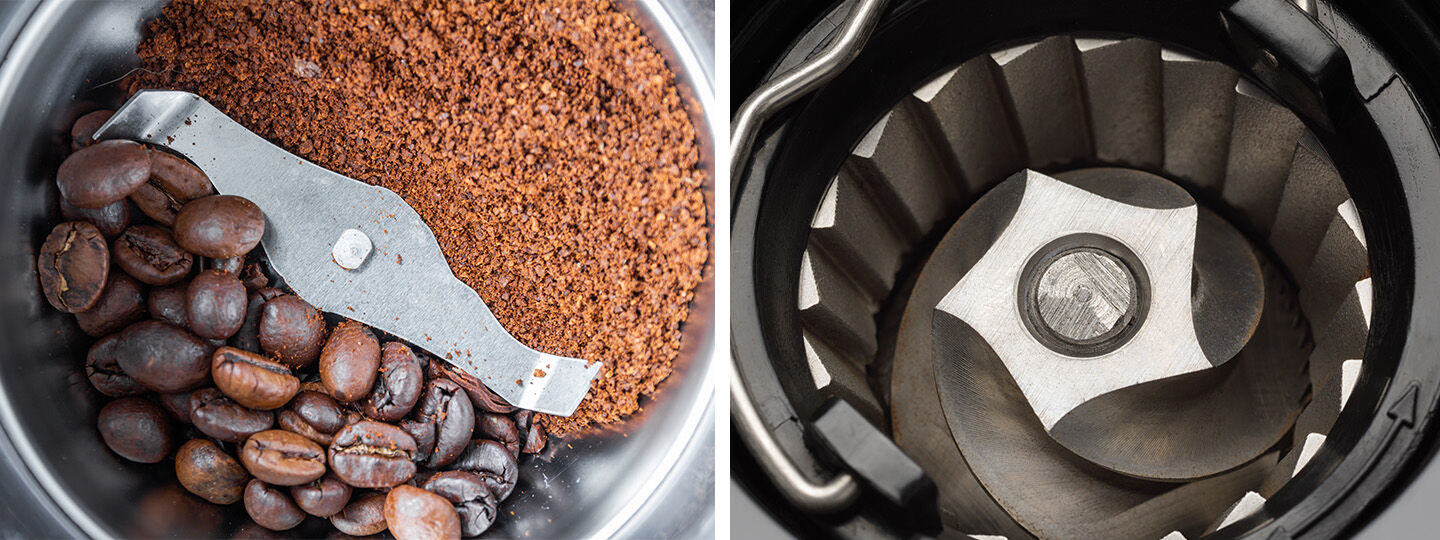
Most "regular" coffee grinders fall into one of two categories. Blade grinders, which essentially chop coffee beans with spinning blades, are a definite no-go for espresso. They create an incredibly inconsistent mix of boulders and dust, making any attempt at espresso frustrating and fruitless.
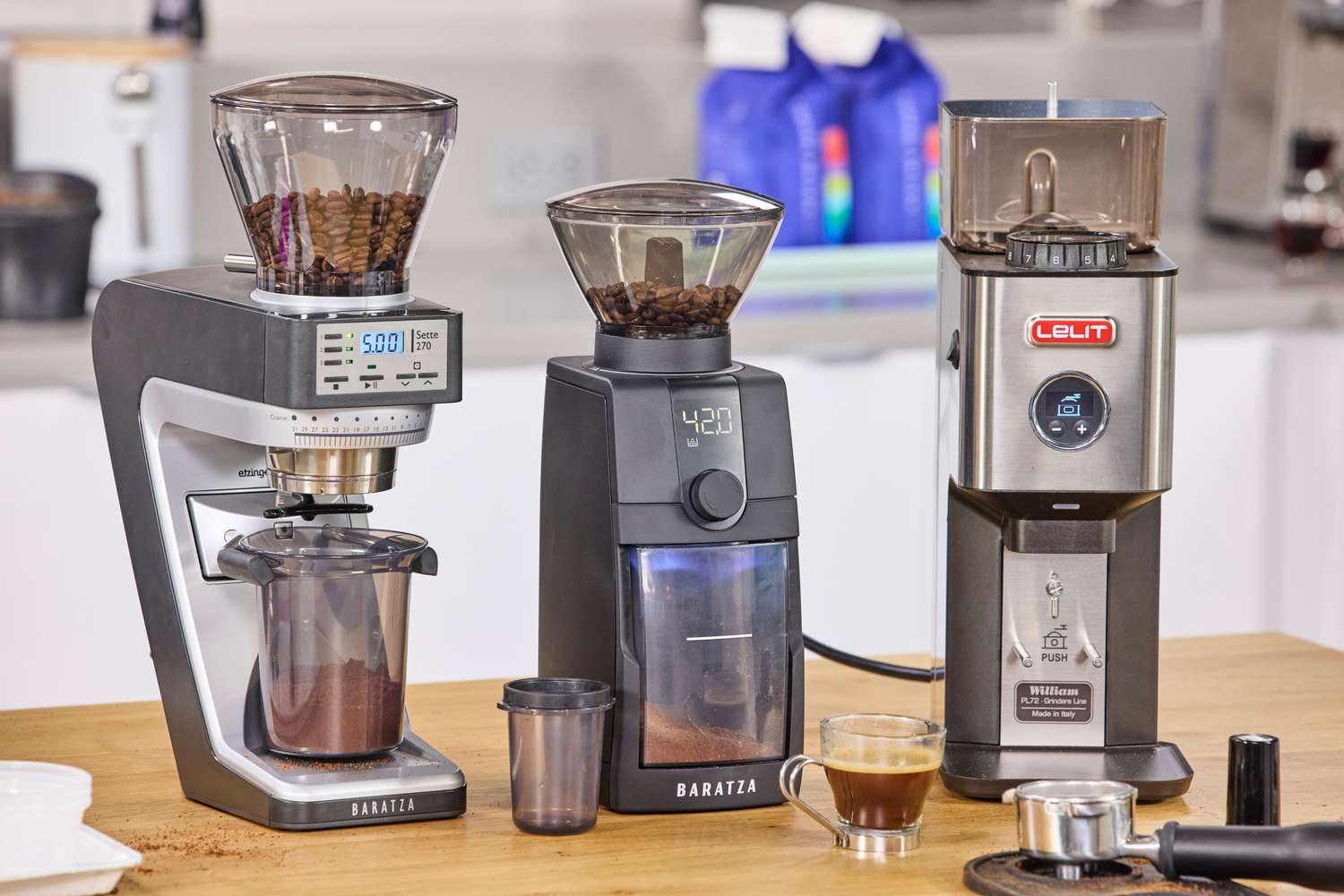
Burr grinders, which crush beans between two abrasive surfaces, are superior. They come in flat or conical burr configurations. While many regular burr grinders are excellent for drip coffee, pour-over, or French press, their design often isn't fine-tuned enough for espresso. Dedicated espresso grinders almost exclusively use high-quality burrs, typically larger and designed for the rigorous demands of producing a consistent, micro-fine grind.
Grind settings and Adjustment
Here's where the rubber truly meets the road. Regular coffee grinders typically offer a limited number of stepped grind settings, designed for the broader range of brewing methods like pour-over or French press. The difference between their finest setting and the next coarsest might still be too significant for the minute adjustments espresso demands.
Espresso grinders, however, feature either stepless adjustment or micro-step settings. This allows you to make incredibly tiny tweaks to the grind size, often turning a ring by just a hair's breadth to fine-tune your shot time from 20 to 30 seconds. This level of granular control is absolutely essential for dialing in espresso, as even slight changes in bean age, humidity, or roast can require a quick adjustment.
Motor Power and RPM
Espresso grinders are engineered with robust motors that can handle the stress of grinding extremely finely without overheating or stalling. They often operate at lower RPMs (rotations per minute) to minimize heat buildup during grinding, which can degrade the delicate aromatics of the coffee.
Regular grinders, particularly budget-friendly ones, might struggle with the resistance of grinding to espresso fineness. Their motors might overheat, leading to static, clumping, and a less consistent grind, ultimately compromising the quality of your espresso. I've personally seen and experienced how a grinder not designed for this task can quickly become clogged or even burn out its motor.
The Challenges of Using a Regular Grinder for Espresso
Trying to force a regular coffee grinder into service for espresso is often a path paved with frustration and disappointing results. While the idea of saving money is appealing, the compromises you make in shot quality can quickly outweigh any initial savings.
Inconsistent Particle Size
The most significant hurdle is the inability of a regular coffee grinder to produce a truly consistent, super-fine particle size. You'll often end up with a mix of fine dust and larger chunks. When brewing, this leads to an uneven extraction: the fine particles will over-extract quickly, tasting bitter, while the coarser particles will under-extract, tasting sour and watery. You're left with a confusing, unbalanced shot that lacks the nuanced flavors and rich body of a properly made espresso.
Inability to Achieve Fine Enough Grind
Even on its absolute finest setting, a regular coffee grinder often cannot grind coffee finely enough for espresso. If the grind is too coarse, the water will rush through the coffee puck too quickly, resulting in an "under-extracted" shot that is thin, weak, and sour, lacking crema. It won't build sufficient pressure in your espresso machine. Conversely, if you somehow manage a somewhat finer grind, but it's wildly inconsistent, you might "choke" your machine one moment and then have water gush through the next.
Heat Generation
Grinding coffee, especially to a fine consistency, generates friction and heat. Regular grinders, often with less robust motors and higher RPMs, can generate significant heat. This heat can subtly "cook" the coffee grounds before brewing, stripping away delicate volatile compounds that contribute to the aroma and flavor of your espresso. It's a subtle but critical factor that impacts the final taste.
Durability and Longevity
Regular coffee grinders are simply not built for the continuous stress of grinding coffee to espresso fineness. The motors, burrs, and overall construction are optimized for coarser grinds and intermittent use. Repeatedly attempting to grind for espresso can put undue strain on the motor, wear down the burrs prematurely, and ultimately shorten the lifespan of the grinder. It's an investment that might cost you more in replacements down the line.
 Source: seriouseats.com
When a Regular Grinder Might Work (with caveats)
While dedicated espresso grinders are ideal, there are very specific, rare scenarios where a high-quality regular grinder might produce a passable shot, albeit with significant compromises. This usually involves higher-end conical burr grinders that, even if designed for other methods, boast extremely precise engineering.
I once experimented with a top-tier conical burr grinder that had an incredibly fine adjustment range. On its absolute finest setting, it could produce a grind that was almost fine enough, allowing for a decent extraction time on certain espresso machines, particularly those with pressurized portafilters. Pressurized portafilters are more forgiving of grind inconsistencies, using a valve to create artificial pressure, so they can sometimes salvage a shot from a less-than-ideal grind.
However, even in this best-case scenario, the resulting espresso still lacked the complexity, body, and consistent crema of a shot pulled with a true espresso grinder. It was a compromise, a functional cup of coffee that vaguely resembled espresso, but it wasn't the rich, nuanced experience true espresso enthusiasts chase.
Tips for Grinding Espresso if a Dedicated Grinder Isn't an Option (Temporary Solutions)
If you're absolutely stuck and a dedicated espresso grinder isn't in your immediate future, here are some temporary tips to try and squeeze the best possible shot out of your regular burr grinder. Remember, these are compromises, not solutions, for getting a good espresso grind.
- Use the finest setting on your burr grinder: Push your grinder to its absolute limit. You might even try adjusting it while it's running (if your grinder allows this safely) to get slightly finer, but be cautious not to damage the motor or burrs.
- Grind in small batches: This helps reduce heat buildup and minimizes static, which can make clumping worse. Grinding only what you need immediately also ensures freshness.
- Consider slightly darker roasts: Darker roasted beans tend to be more brittle and easier to grind finely compared to lighter roasts. This might give you a slightly better chance of achieving a suitable texture.
- Adjust dosing and tamping technique: With a potentially coarser and inconsistent grind, you might need to increase your coffee dose slightly and tamp with more pressure to create enough resistance. However, be careful not to over-tamp, as this can lead to channeling too.
- Utilize a pressurized portafilter: If your espresso machine has a pressurized portafilter (often found on entry-level home machines), use it. It's designed to be more forgiving of grind size inconsistencies, helping to create some crema even with an imperfect grind.
Source: cuisinart.com
The Verdict: Is It Worth It?
After all this exploration, the clear answer is that while you can try to use a regular coffee grinder for espresso, the effort and frustration rarely lead to satisfying results. For a truly authentic, delicious, and consistent espresso experience at home, a dedicated espresso grinder is an indispensable tool. It's the component that gives you the control and precision needed to dial in your shots, extract the full flavor potential of your beans, and consistently achieve that coveted crema.
Think of it as an investment in your daily ritual and your palate. The difference a proper espresso grinder makes is not subtle; it's transformative. Trying to get by with a regular coffee grinder for espresso will likely leave you with a constant stream of mediocre shots and a nagging feeling that something is missing. For many years, I thought I could cut corners, but I quickly learned that the grinder is just as important, if not more so, than the espresso machine itself.

Frequently Asked Questions about Espresso Grinding
What is the ideal grind size for espresso?
The ideal grind size for espresso is extremely fine, resembling powdered sugar or fine sand, allowing water to extract flavor evenly under high pressure. This fine consistency creates the necessary resistance for a proper shot time and rich crema.
Can I use pre-ground coffee for espresso?
While convenient, pre-ground coffee is generally not recommended for espresso because it quickly loses freshness and its grind size is almost never suitable for the high precision required by espresso machines. Using freshly ground beans is crucial for optimal flavor and extraction.
Are blade grinders ever good for espresso?
No, blade grinders are never suitable for espresso. They chop beans inconsistently, creating an uneven mix of coarse particles and fine dust, which leads to poor extraction and an unpleasant tasting espresso shot.
How does grind consistency affect espresso taste?
Grind consistency profoundly affects espresso taste; an inconsistent grind causes uneven extraction, leading to sour, watery flavors from under-extraction and bitter, harsh notes from over-extraction in the same shot. A uniform grind ensures balanced and delicious espresso.
What's the cheapest way to get a good espresso grind?
The cheapest way to get a decent espresso grind is often a high-quality manual burr grinder designed for espresso, as they offer excellent consistency and fine adjustment at a lower cost than electric models. While slower, they provide the necessary precision for a good espresso shot.
Conclusion
Ultimately, the quest for truly exceptional espresso begins with the grind. While the thought of using a regular coffee grinder for espresso might seem like a clever shortcut, the reality is that the specialized requirements of espresso demand a dedicated tool. Investing in a quality espresso grinder, one designed to deliver the ultra-fine and consistent particles needed, will elevate your home brewing experience from merely functional to genuinely delightful. Don't compromise on this critical step; embrace the journey of dialing in your grind, and you'll be rewarded with consistently delicious shots and a newfound appreciation for the art of espresso. Share your own grinder stories and espresso experiences in the comments below, or explore our other guides for more tips on mastering your home espresso setup!