Steel Vs Ceramic Burrs: Coffee Grinder Showdown
Steel burrs excel for precise espresso grinds, while ceramic burrs offer quiet operation and rust resistance for general brewing.
When you embark on the journey of brewing exceptional coffee at home, one of the most pivotal decisions you'll face involves the heart of your grinder: the burrs. Understanding the fundamental distinctions between steel vs ceramic coffee grinder burrs is crucial, as this choice profoundly impacts your grind quality, the longevity of your equipment, and ultimately, the flavor in your cup. As someone who’s spent countless hours perfecting my brew, from dialing in espresso shots to crafting the perfect pour-over, I can attest that the material of your grinder’s burrs is far more than a mere technical specification – it’s a gateway to unlocking your coffee’s true potential. Join me as we explore the intricate world of steel vs ceramic coffee grinder burrs, helping you make an informed decision for your unique coffee ritual.
Understanding Coffee Grinder Burrs
Before we dive into the specific materials, let's first appreciate what coffee grinder burrs actually do. Burrs are the specialized grinding components within your coffee grinder that crush and mill whole coffee beans into consistent particles. Unlike blade grinders that simply chop beans, burr grinders work by progressively breaking down beans between two abrasive surfaces, resulting in a much more uniform grind. This uniformity is absolutely paramount because it allows for an even extraction when hot water meets the coffee grounds, preventing over-extraction (bitterness) and under-extraction (sourness) in the same brew. A high-quality burr set is the cornerstone of any great cup of coffee, directly influencing everything from the aroma to the mouthfeel.
The Steel Coffee Grinder Burrs: A Closer Look
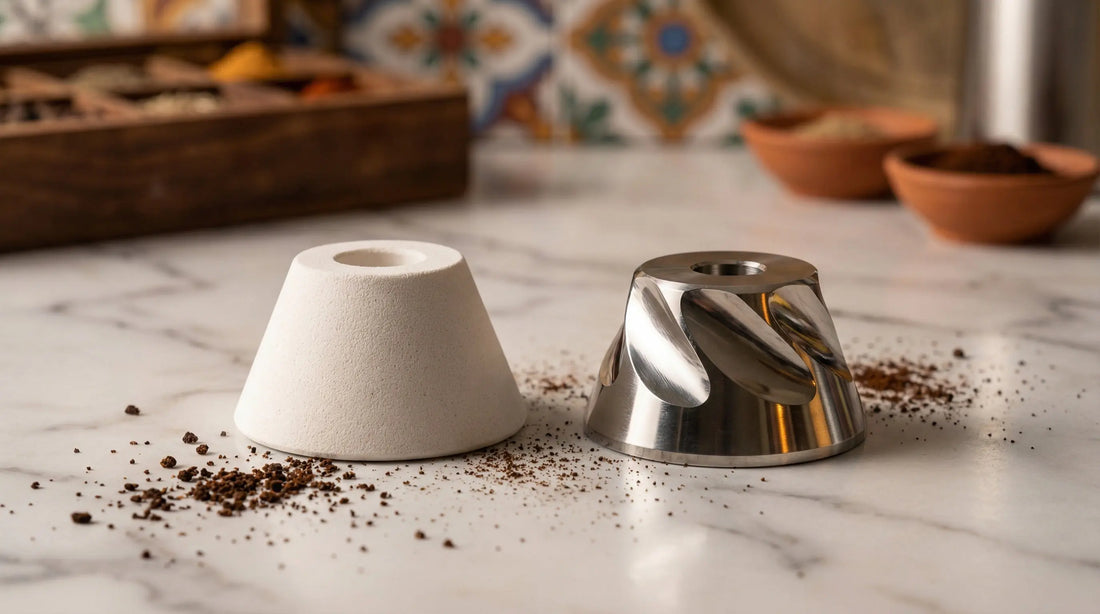
Steel coffee grinder burrs are typically crafted from hardened alloy steel, designed for maximum durability and precision. These burrs are a favorite among coffee professionals and serious home baristas, especially for those who prioritize espresso. The material allows for incredibly sharp edges that can slice through coffee beans with great efficiency, producing a very consistent particle size, which is critical for demanding brewing methods like espresso.
Benefits of Steel Burrs
- Exceptional Precision: Steel burrs are renowned for their ability to achieve very fine, uniform grinds, which is essential for espresso machines where exact particle size dictates extraction quality.
- Durability and Longevity: Made from tough alloys, steel burrs are highly resistant to wear and tear. With proper care, they can last for many years, even decades, making them a worthwhile long-term investment.
- Faster Grinding Speeds: The sharp edges and robust nature of steel allow for quicker grinding, which can be a significant advantage when preparing multiple batches of coffee.
- Better Heat Dissipation (Generally): While grinding always generates heat, steel tends to dissipate it more effectively than ceramic, which can be crucial for preserving delicate coffee flavors during longer grinding sessions.
Limitations of Steel Burrs
- Noise Level: Steel burrs are typically louder than their ceramic counterparts, a factor to consider if you're an early riser in a quiet household.
- Cost: Grinders equipped with high-quality steel burrs often come with a higher upfront price tag due to the material and precision manufacturing involved.
- Potential for Dullness: Over a very long period, or if grinding very dark, oily beans frequently, steel burrs can gradually lose some of their sharpness, requiring eventual replacement.
From my own experience, when I first upgraded to a grinder with high-quality steel burrs for my espresso setup, the difference was immediate and undeniable. The consistency of the grind allowed me to really dial in my shots, eliminating the frustrating inconsistencies I'd experienced before. While they are a bit noisier, the unparalleled control over particle size makes them a non-negotiable for my morning espresso ritual. This really highlights the key advantage of steel vs ceramic coffee grinder burrs for specific brewing needs.

The Ceramic Coffee Grinder Burrs: Delving Deeper
Ceramic coffee grinder burrs are made from a high-tech material, often zirconia, which is known for its extreme hardness. These burrs are frequently found in manual hand grinders and many entry to mid-range electric grinders, appealing to a broad audience due to their unique properties. They approach the task of grinding beans differently than steel, offering a distinct set of advantages and drawbacks.
Benefits of Ceramic Burrs
- Quieter Operation: This is often the most noticeable advantage. Ceramic burrs operate with less acoustic intensity, making them ideal for those who prefer a more peaceful grinding experience.
- Less Heat Transfer: Ceramic has lower thermal conductivity than steel, meaning it transfers less heat to the coffee beans during grinding. This can be beneficial for preserving delicate aromas and preventing premature staling.
- Exceptional Hardness and Durability: Ceramic burrs are incredibly hard, often harder than steel. This hardness means they resist wear very well and stay sharp for a long time. They also won't rust, which is a nice bonus for longevity.
- Rust-Proof: Unlike steel, ceramic burrs are completely immune to rust, which can be a small but significant advantage in humid environments or if you're not meticulous with cleaning.
- Often More Affordable: Many grinders featuring ceramic burrs are available at a more accessible price point, making them a great starting option for new home brewers.
Limitations of Ceramic Burrs
- Brittleness: The primary drawback of ceramic is its brittleness. A stray pebble in your coffee beans or an accidental drop of a hand grinder can lead to chipping or cracking of the burrs, necessitating replacement.
- Slower Grinding Speeds: Due to their material properties and design, ceramic burrs can sometimes grind slower than steel, particularly at finer settings.
- Potential for More Fines: While ceramic burrs are very good at grinding consistently, some users report that they can produce slightly more "fines" (very tiny particles) when grinding for espresso, which might impact extraction.
I remember recommending a ceramic burr hand grinder to a friend who lives in an apartment with thin walls. The quiet operation was a huge selling point for them, allowing them to enjoy freshly ground coffee without waking their neighbors. While I personally lean towards steel for my specific espresso needs, I've always appreciated the silent efficiency of ceramic burrs for things like my morning pour-over when I'm just looking for a peaceful start to the day. This really illustrates the nuances of the "Steel vs Ceramic Coffee Grinder Burrs: What's the Difference?" discussion.
Steel vs Ceramic Coffee Grinder Burrs: The Core Differences
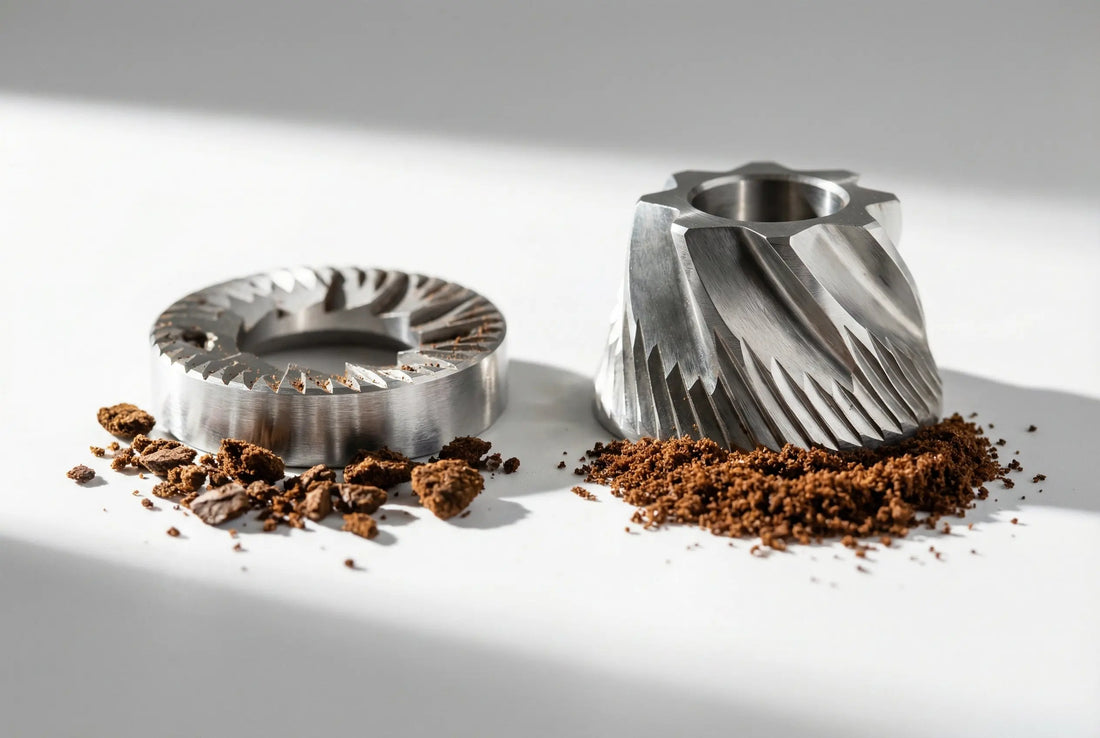
When comparing steel vs ceramic coffee grinder burrs, it’s not just about which one is "better," but rather which one is better for you and your brewing habits. Let's break down the key differentiators that influence performance and user experience.
- Material Composition: Steel burrs are crafted from hardened alloys, offering a balance of strength and sharpness. Ceramic burrs are made from a very hard, non-metallic material like zirconia, prized for its extreme hardness and resistance to wear.
- Durability and Lifespan: Both materials are durable, but in different ways. Steel burrs can withstand significant impact and general wear over time, gradually dulling. Ceramic burrs are incredibly hard and retain their sharpness for a very long time, but they are more susceptible to chipping or cracking if dropped or if hard foreign objects (like small stones) get into the grinder.
- Grind Consistency and Particle Distribution: High-quality steel burrs are often favored for their superior grind consistency, especially at fine settings, producing fewer "fines" and a more uniform particle distribution crucial for espresso. Ceramic burrs also deliver excellent consistency, particularly for coarser grinds, but some argue they might produce slightly more fines at very fine settings.
- Heat Generation: Grinding coffee inherently generates friction and thus heat. Steel generally dissipates heat more effectively than ceramic, which is important during extended grinding sessions to prevent the beans from "baking" and losing volatile aromas. Ceramic, while retaining heat more, is less thermally conductive, meaning less heat transfers to the coffee itself.
- Noise Level: This is one of the most immediate differences you'll notice. Steel burrs tend to be significantly louder than ceramic burrs, which offer a much quieter grinding experience.
- Cost: While there are exceptions, grinders with high-quality steel burrs, particularly those designed for espresso, often have a higher initial price point than many ceramic burr grinders.
- Maintenance and Cleaning: Both burr types benefit from regular cleaning. Ceramic burrs have the advantage of being rust-proof, which can simplify cleaning if you use water (though dry cleaning is always recommended for grinders). Steel burrs might require a bit more vigilance against rust if exposed to moisture for prolonged periods.
- Best Use Cases: The "Steel vs Ceramic Coffee Grinder Burrs: What's the Difference?" often boils down to this. Steel burrs are the go-to for espresso, where consistency and precision at very fine settings are paramount. Ceramic burrs shine in manual grinders and for brewing methods like pour-over, French press, and drip coffee, where their quiet operation and consistent coarser grinds are highly valued.

Source: hotean.com
Choosing Your Ideal Burrs: What to Consider
Deciding between steel vs ceramic coffee grinder burrs doesn't have to be a daunting task. By considering a few key aspects of your coffee journey, you can confidently make the right choice for your needs.
- Your Preferred Brewing Method:
- Espresso Enthusiast? If you're serious about espresso, where grind consistency is absolutely critical, high-quality steel burrs are almost always the superior choice. Their ability to produce extremely uniform fine grinds is unmatched.
- Pour-Over, Drip, or French Press Lover? For these methods, where a coarser grind is typically used, ceramic burrs offer excellent performance, consistency, and a quieter experience.
- Budget: Grinders with premium steel burrs, especially those for espresso, generally require a larger initial investment. If you're starting out or on a tighter budget, a ceramic burr grinder can offer fantastic value and performance.
- Noise Preference: Do you value a peaceful morning routine? If noise is a concern, ceramic burrs are significantly quieter and will be a welcome addition to your kitchen. If you don't mind a bit of rumble, steel burrs won't be an issue.
- Durability vs. Brittleness: Consider your environment. If your grinder might be susceptible to drops or you're concerned about hard objects in beans, the resilience of steel might be preferable. If you handle your equipment with care, the hardness of ceramic is excellent.
- Grind Speed: For daily, single-cup brewing, the speed difference might be negligible. However, if you're grinding large batches or are in a hurry, steel burrs typically offer faster grinding times.
Ultimately, the best choice in the "Steel vs Ceramic Coffee Grinder Burrs: What's the Difference?" debate comes down to aligning the burr type with your personal preferences, brewing style, and budget. There's no single "best" option, just the best option for you.
Frequently Asked Questions
Are ceramic burrs better than steel for espresso?
Generally, no. While ceramic burrs can grind fine enough for espresso, high-quality steel burrs are preferred for espresso due to their superior ability to produce an extremely consistent grind with fewer "fines," which is crucial for optimal espresso extraction.
How long do steel burrs last compared to ceramic?
Both steel and ceramic burrs are designed for longevity. Steel burrs can last many years, even decades, with proper care before gradually dulling. Ceramic burrs retain their sharpness for an exceptionally long time, but they are more prone to chipping or cracking from impact than steel.
Can I replace ceramic burrs with steel burrs in my grinder?
Typically, no. Grinders are designed specifically for either steel or ceramic burrs, and the parts are not interchangeable. The mounting mechanisms and motor specifications are usually different, making a direct swap impossible.
Which burr type is easier to clean?
Both types of burrs require regular cleaning. Ceramic burrs have the advantage of being rust-proof, which can make them slightly easier to maintain if any moisture is involved. However, dry brushing and using grinder cleaning tablets work effectively for both.
Do ceramic burrs make more uniform grinds?
For coarser grinds used in methods like pour-over or French press, ceramic burrs produce very uniform results. For very fine grinds, like espresso, high-quality steel burrs are often considered to yield a more uniform particle distribution with fewer problematic "fines."
Conclusion
Navigating the choice between steel vs ceramic coffee grinder burrs reveals that both materials offer distinct advantages, each catering to different brewing philosophies and preferences. Steel burrs stand out for their exceptional precision, durability, and suitability for espresso, allowing for unparalleled control over your grind. Ceramic burrs, on the other hand, shine with their quiet operation, rust-proof nature, and consistent performance for a range of brewing methods, all often at a more accessible price point. The ultimate takeaway is that your ideal choice hinges on your specific brewing method, budget, noise tolerance, and how you prioritize grind consistency, especially for finer settings.
I encourage you to consider what truly matters to you in your daily coffee ritual. Don't be afraid to experiment, read reviews, and perhaps even try grinders with both types of burrs if the opportunity arises. Understanding the nuances of steel vs ceramic coffee grinder burrs is a significant step towards unlocking a richer, more satisfying coffee experience. Share your thoughts in the comments below – which burr type do you prefer, and why?